




More than 10,000 small-scale farmers in Africa and Latin America have gained access to new knowledge, technologies, and advisory services through an international initiative aimed at promoting more sustainable and resilient agricultural practices.
According to an IICA press release, the Rural Advisory and Agroecology Project (AERAS) has spent the last two years helping farmers adopt agroecological approaches that balance environmental stewardship, economic viability, and social well-being. The project focuses on strengthening food systems while improving the livelihoods of rural communities.
IICA said that AERAS is being carried out through a partnership involving the Latin American Network of Rural Extension Services (RELASER), the Global Forum for Rural Advisory Services (GFRAS), and the Inter-American Institute for Cooperation on Agriculture (IICA). The initiative forms part of the Global Programme for Small-Scale Agroecology Producers and Sustainable Food Systems Transformation (GP-SAEP), which receives support from the European Commission, Belgian Development Cooperation, and Access Agriculture.
The program targets key obstacles that have limited the wider adoption of agroecology in Costa Rica, Ecuador, Madagascar, and Uganda.
The release said that over the course of the project, participating farmers have received training and technical guidance in several agricultural areas, including livestock production, cocoa and coffee cultivation, vegetable farming, Musaceae crops such as bananas and plantains, and tropical root crops. The initiative has also encouraged collaboration among producers, government agencies, academic institutions, and private-sector partners to help farming communities better cope with environmental pressures and economic uncertainties.
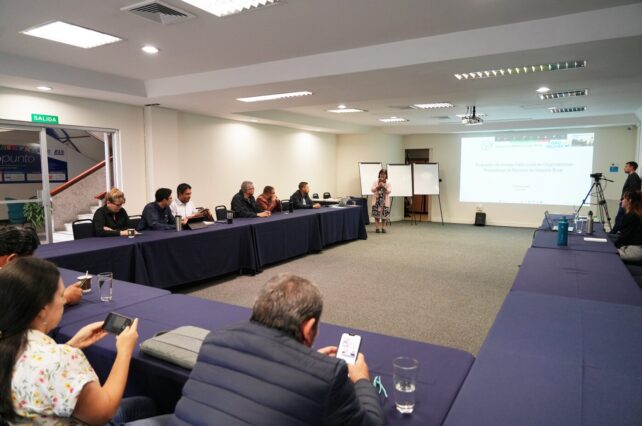
As the project moves into its next phase, stakeholders reportedly recently gathered in Costa Rica to assess achievements, examine lessons learned, and map out future strategies designed to ensure the initiative’s long-term impact.
Project Coordinator and Foro Relaser Costa Rica representative Laura Ramírez Cartín highlighted the broad range of benefits farmers have gained through the initiative.
“AERAS has enabled farmers to acquire knowledge in areas such as the reduction of external inputs, soil health, biodiversity, synergies, economic diversification, joint knowledge creation, food security, impartiality, connectivity, land governance, and resources,” she said.
Kenneth Solano, IICA’s Project Management and Agribusiness Specialist in Costa Rica, underscored the importance of sustainability-focused programs at a time when farmers face growing competitive pressures.
“These environmental, social, and economic sustainability projects are fundamental in tackling the challenges of an increasingly competitive agriculture sector; and they require proper support to generate a long-lasting impact,” Solano stated.
He also emphasized the value of ongoing evaluation and collaboration.
“These reflective and evaluation exercises are vital in laying the foundation for our work and defining the next steps of the project, to ensure that this effort will endure and continue to create positive results in the region,” he added.
Meanwhile, project consultant Oswaldo Páez Aponte stressed that the initiative’s true success will be measured by its lasting influence beyond the project’s official timeline.
“The most valuable changes stemming from AERAS are those that will extend beyond the duration of the project. The most significant thing is to ensure that these agroecological practices do not remain on paper but gain traction in the organizations that are providing extension and consultancy services in rural areas,” he said.
Looking ahead, the project plans to strengthen partnerships between public and private institutions, creating a stronger network for sharing resources, expertise, and commitments. Organizers say these collaborative efforts will help sustain the momentum already achieved and further expand the adoption of agroecological practices across participating countries.
Disclaimer: The comments posted do not necessarily reflect the views of DominicaNewsOnline.com and its parent company or any individual staff member. All comments are posted subject to approval by DominicaNewsOnline.com. We never censor based on political or ideological points of view, but we do try to maintain a sensible balance between free speech and responsible moderating.
We will delete comments that:
See our full comment/user policy/agreement.