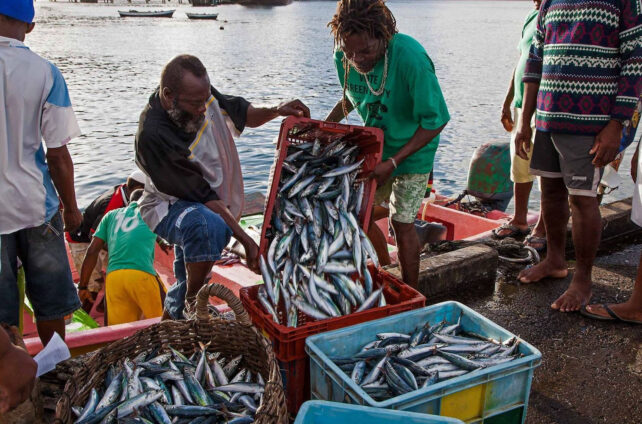
Fisheries and aquaculture employ hundreds of thousands of workers across the Caribbean. The sector is a major contributor to the region’s economies, as well as to sustainable livelihoods, and food and nutrition security. (Photo: CRFM)
Belize City, Wednesday, 5 April 2023 (CRFM)—The Caribbean Fisheries Forum, the technical and advisory arm of the Caribbean Regional Fisheries Mechanism (CRFM), convened its 21st Meeting earlier this week, on 3 – 4 April 2023. The Forum—which is made up of the heads of national fisheries departments and divisions of the CRFM countries, stakeholders, and regional and international development partners—focused on advancing sustainable management, conservation and development of the region’s fisheries and aquaculture sector.
The Executive Director of the CRFM, Milton Haughton, said: “The Forum discussed and agreed on a number of very important actions to strengthen governance and management of the fisheries sector as we move forward to realize our collective vision of a future of profitable, sustainable fisheries and aquaculture industries, thriving and resilient fishing communities, underpinned by healthy ecosystems and marine biodiversity and driven by the application of science, technology, innovation and entrepreneurship of our people.”
He added that, “It is imperative at this time that we accelerate development and implementation of the policy, legal and institutional reforms and make the investments needed to realize the full potential of our marine and other aquatic resources for sustainable development of our countries, and to provide adequate food, decent jobs, and a better quality of life for our people in the region.”
The gathering addressed a range of regional challenges and opportunities, including building the sector’s resilience to environmental and economic shocks, improving food security, strengthening regional and international trade, and the state of the fisheries resources. They also discussed implementing the recently concluded World Trade Organization (WTO) Fisheries Subsidies agreement and the Post 2020 Global Biodiversity Framework adopted by the 15th Meeting of the Conference of Parties to the Convention on Biological Diversity, as well as collaboration with international development partners and donors, training, and capacity building in the public and private sector. Furthermore, they discussed blue economic development, including the initiation of the GEF-funded BE-CLME+ Project (Promoting National Blue Economy Priorities Through Marine Spatial Planning in the Caribbean Large Marine Ecosystem Plus), which is valued at approximately USD 47 million.
A healthy and resilient Caribbean fisheries underpins a vibrant sector that feeds families across the Caribbean. (Photo: CRFM)
Also high on the Forum’s agenda was the need to reduce disaster risk and improve the climate resilience of the fisheries and aquaculture sector, as well as the persistent Sargassum influxes—which are forecasted to be the largest ever recorded for this region this year—through the development of innovative climate resilient products to bolster economic growth, under the New Zealand-funded project being implemented by the CRFM and Plant and Food Research Limited of New Zealand, in collaboration with other regional partners.
The Forum, which supports the CRFM Ministerial Council with the development of regional policies and decisions, also finalized the text of a new regional protocol to the Caribbean Community Common Fisheries Policy, focused on the Role of Fish and Seafood as a strategic resource for food and nutrition security in the region. The formulation of this policy is timely, as the CRFM and other CARICOM bodies make a concerted effort to reduce the region’s food import bill by 25% by 2025.
The Forum also finalized the text of a regional policy document aimed at preventing Abandoned, Lost or otherwise Discarded Fishing Gear (ALDFG), and the CRFM’s collaboration with the Global Ghost Gear Initiative to address the problem, which adversely affects the marine environment and ecosystems. Efforts to address illegal, unreported, and unregulated fishing and transnational organized crime, which use fishing as a cover for illegal maritime activities, were also discussed. The Forum noted the contributions of the CRFM and Member States to an international effort to develop voluntary guidelines for transshipment, under the auspices of the UN Food and Agriculture Organization (FAO).
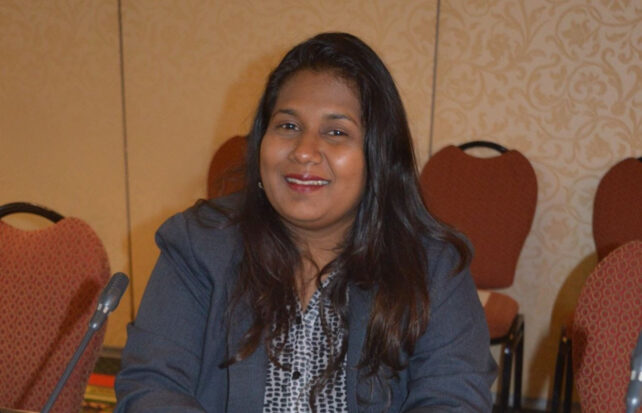
For the past year, Suriname has served as Chair of the Caribbean Fisheries Forum. At the start of the Forum meeting, a new chair was elected, and Mr. Zojindra Arjune, Deputy Director of Fisheries, Suriname, handed over the leadership of the Forum to Mrs. Nerissa Lucky, Director of Fisheries, Trinidad and Tobago. The Turks and Caicos Islands was elected as vice chair.
During its 21st Meeting, the Caribbean Fisheries Forum formulated a set of policy recommendations for action by the CRFM Ministerial Council, comprised of Ministers responsible for Fisheries and Aquaculture from the 17 CRFM Member States, when they meet near the end of April.
Mrs. Nerissa Lucky, Chief Fisheries Officer, Trinidad and Tobago – chair of the Caribbean Fisheries Forum, 2023-2024 (Photo: CRFM)
Disclaimer: The comments posted do not necessarily reflect the views of
DominicaNewsOnline.com and its parent company or any individual staff member.
All comments are posted subject to approval by DominicaNewsOnline.com. We never
censor based on political or ideological points of view, but we do try to maintain
a sensible balance between free speech and responsible moderating.
We will delete comments that:
contain any material which violates or infringes the rights of any person, are defamatory or harassing or are purely ad hominem attacks
a reasonable person would consider abusive or profane
contain material which violates or encourages others to violate any applicable law
promote prejudice or prejudicial hatred of any kind
refer to people arrested or charged with a crime as though they had been found guilty
contain links to "chain letters", pornographic or obscene movies or graphic images
I’m done with eating anything from the sea. Sea is the world’s main dumping ground. Besides human bodies the sea is haven to tons of radioactive materials/waste which have a lifespan up to thousands of years. So eat your fish – but there’s something fishy scientists ain’t telling us. As a matter, fish doesn’t taste like fish no more. You have to load it with all types of seasoning before you could eat that poison.





I’m done with eating anything from the sea. Sea is the world’s main dumping ground. Besides human bodies the sea is haven to tons of radioactive materials/waste which have a lifespan up to thousands of years. So eat your fish – but there’s something fishy scientists ain’t telling us. As a matter, fish doesn’t taste like fish no more. You have to load it with all types of seasoning before you could eat that poison.