




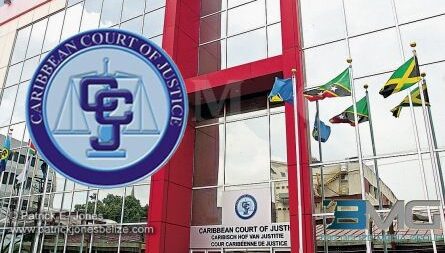
Article 211 of the RTC indicates that disputes may arise a) between Member States parties to the treaty, b) between those Member States and the Caribbean Community, c) from applications by persons under Article 222 of the treaty, or d) between litigants appearing before national courts or tribunals of Member States. Where a dispute arises before national courts or tribunals, the RTC allows the local court or tribunal to refer the issue to the CCJ once it concerns the interpretation or application of the Treaty. Evidently, national courts and tribunals are critical partners charged with ensuring that CARICOM Law takes full effect and that the rights of the treaty are adequately protected.
Notwithstanding these provisions, no referrals have been sent to the CCJ throughout its 17-year history. This sensitisation campaign is therefore vital to facilitate a deeper understanding about the referral process. In addition to the launch of these two public education pieces, the Court will also conduct regional training for judicial officers and attorneys and utilise other engagement methods incorporating traditional and digital platforms. By the end of each training session, participants will be able to identify when a question concerning the interpretation and application of the RTC arises in domestic proceedings, assess whether a referral should be made to the CCJ, formulate the question(s) to be referred together with the ancillary information to be supplied to the CCJ, oversee/supervise the process of making the referral utilising the office of the Registrar, and apply the ruling of the CCJ to resolve the dispute. The first training session is scheduled for November 2022, with subsequent sessions being conducted in 2023 throughout the region.
All Heads of Judiciaries and judicial officers present at the CAJO Conference received a copy of the referral manual. In the upcoming days, the English and Dutch versions of the video and the manual, will be available on the Court’s website www.ccj.org.
Disclaimer: The comments posted do not necessarily reflect the views of DominicaNewsOnline.com and its parent company or any individual staff member. All comments are posted subject to approval by DominicaNewsOnline.com. We never censor based on political or ideological points of view, but we do try to maintain a sensible balance between free speech and responsible moderating.
We will delete comments that:
See our full comment/user policy/agreement.