




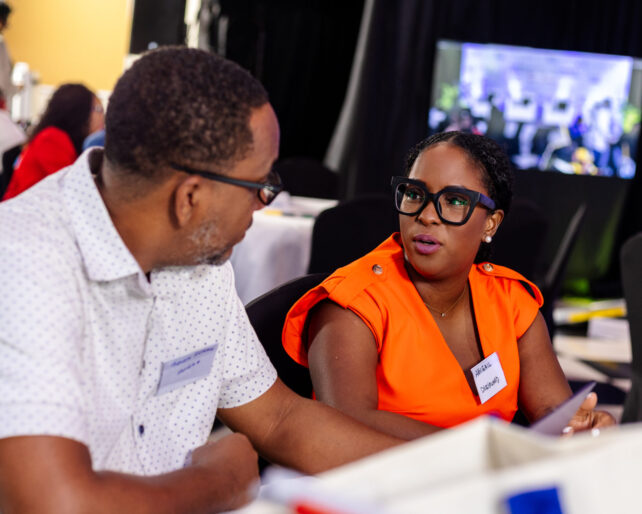
AgriHub recently gave voice to Dominica’s agricultural sector within a significant regional forum dedicated to civil society’s future, as part of the Caribbean Civil Society Organization (CSO) Conference and World NGO Day celebrations held in Jamaica from February 22 to 25, 2026.
The event, themed “The Shift: Igniting Civil Society’s Next Chapter,” aimed to explore innovative pathways for civil society organizations (CSOs) to adapt and thrive amidst evolving development challenges.
Funded by the Government of Canada’s Local Engagement and Action Fund alongside the Caribbean Development Bank’s Basic Needs Trust Fund, a press release shared that the conference brought together over 120 in-person delegates from 12 Caribbean nations, with more than 600 additional participants engaging virtually. The gathering focused on strategies for CSOs to maintain resilience, foster innovation, and ensure financial sustainability in a changing global landscape.
Representing Dominica, AgriHub engaged in high-level discussions covering governance, financial management, advocacy, and institutional development. Abigail Shillingford, Founder and Executive Director of AgriHub, contributed to the session titled “Voices of the CSO,” emphasizing the importance of economic empowerment within non-profit organizations.

“The most significant takeaway for us is the economic value we must create as non-profit organisations and as civil society. If we are to serve communities effectively, we must build structured, sustainable institutions that can generate impact beyond grant cycles”, said Founder and Executive Director Abigail Shillingford.
Canada’s commitment to inclusive development was reaffirmed through the commendation of AgriHub and other regional civil society organizations by Abebech Assefa, Development Counsellor at the High Commission of Canada in Barbados and the Eastern Caribbean. She highlighted Canada’s broader approach to partnership, which extends beyond government institutions to include civil society actors.
“Canada is pleased to see AgriHub and other Caribbean civil society organisations engaging at this level,” Assefa said. “Our partnerships in the region extend beyond policymakers and government institutions. We firmly believe that inclusive growth and sustainable development must include civil society. Organisations like AgriHub play a vital role in shaping resilient economies and advancing opportunity at the community level.”
Reportedly, the conference also addressed key structural issues impacting civil society in the Caribbean. Leaders discussed declining international aid flows, increased competition for funding, the rise of performance-based financing models, and more stringent accountability standards. Emphasis was placed on strengthening governance, establishing disciplined financial systems, and engaging in long-term strategic planning as essential steps toward organizational growth.
For Dominica, AgriHub’s involvement offers tangible benefits, said the release. By enhancing governance frameworks, diversifying revenue sources, and investing in impact measurement, the organization aims to attract funding to support farmers, agro-processors, and rural entrepreneurs. These efforts are expected to lead to expanded training initiatives, more robust value chains, and the adoption of climate-resilient agricultural practices, ultimately improving income stability for households across the country.
Agrihub contends that the conference underscored the necessity for civil society to transition from survival-focused budgeting to building sustainable, systems-driven institutions capable of mobilizing diverse revenue streams. The group says it has committed to increasing its revenue-generation capacity, sharpening its value proposition, and bolstering strategic advocacy to prioritize agricultural development within national economic agendas.
Evolving models of collaboration between civil society and government were also examined. Case studies, including Belize’s formal representation of civil society in its Senate, demonstrated the importance of structured engagement and meaningful participation in national decision-making processes.
Shillingford also highlighted administrative hurdles faced by NGOs in Dominica. She pointed out that the registration process can take up to three years, hindering timely access to development funding. She advocated for modernized administrative procedures to improve transparency, accountability, and the country’s ability to attract international support.
As per the release, Canada continues to support AgriHub’s growth through targeted partnerships. Beyond its contribution to the regional conference via the Local Engagement and Action Fund, Canada is directly backing AgriHub’s project “SheHarvest: Gender-Sensitive Business Strategies for Climate-Smart Agriculture in Dominica” under the Canada Fund for Local Initiatives. This initiative aims to equip women farmers and agro-entrepreneurs with business skills and climate-smart techniques, enhancing productivity, increasing household incomes, and promoting greater participation in agricultural markets.
Disclaimer: The comments posted do not necessarily reflect the views of DominicaNewsOnline.com and its parent company or any individual staff member. All comments are posted subject to approval by DominicaNewsOnline.com. We never censor based on political or ideological points of view, but we do try to maintain a sensible balance between free speech and responsible moderating.
We will delete comments that:
See our full comment/user policy/agreement.