




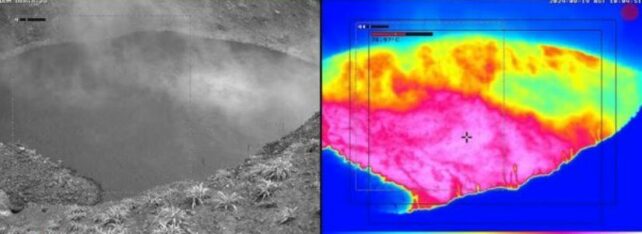
The Boiling Lake has returned to stable conditions but the public is being asked to exercise caution while visiting the area.
The Trinidad-based UWI Seismic Research Center (UWI-SCRC), which has been monitoring the lake, said in its final report that it was going to be the last one since the lake has been observed as being stable.
“In the last two weeks, observations from the on-site cameras and visits to the Boiling Lake by Forestry officials have shown that the lake has returned to stable conditions,” the report stated.
“Periods of instability can occur without warning and persons visiting should still proceed with caution. This is the final update for this period of instability.”
For the past months, the Boiling Lake has been going through a period of instability and was being monitored by UWI-SRC and the Office of Disaster Management.
The latest round of instability was first observed in December 2023. After that, guides and Forestry officials reported fluctuating lake levels, with the latest significant drop in water levels occurring on March 29. On that day, the lake was nearly empty, with little to no water observed.
Periods of instability and fluctuations of water level in the lake are nothing new and have been observed for centuries.
It actually erupted on January 4, 1880, covering Roseau in ash from a “phreatic eruption” of gas and ash, according to historian Dr Lennox Honychurch.
Although residents of the capital were terrified by the occurrence, no one was hurt. The Boiling Lake is the second largest feature of its kind in the world with the largest being Frying Pan Lake in New Zealand.
It would be nice if you could see this live feed before heading out to the Boiling lake trail