




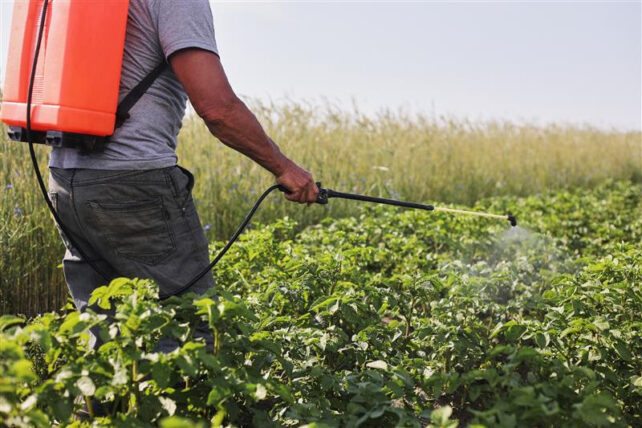
Hundreds of individuals from the region’s agricultural sector are taking part in an extensive six-week training program aimed at enhancing expertise in crop protection. This initiative is designed to strengthen capacity in managing pests and diseases that threaten crop productivity in the Caribbean Community (CARICOM).
The training, delivered through a flexible, self-guided online format, commenced on Monday, January 26, 2025.
CARICOM stated in a release that it is the result of a collaborative partnership involving the CARICOM Secretariat, the Caribbean Agricultural Research and Development Institute (CARDI)—a key regional organization—and COLEAD, a private sector non-profit dedicated to fostering inclusive and sustainable agriculture.
Targeted at a diverse group of agricultural professionals—including farm managers, horticulturalists, production supervisors, nursery operators, crop protection specialists, packing house managers, service providers, and trainers—the course responds directly to the needs of CARICOM Member States.
According to CARICOM, it aligns with the region’s broader efforts to realize its food security vision—“Vision 25 x 2025 + 5”—which aims to cut the region’s food import bill by 25% through bolstering local agriculture, enhancing trade, and creating new economic opportunities.
During the brief opening remarks, Shaun Baugh, Programme Manager of the Agriculture Sector at the CARICOM Secretariat, reportedly emphasized the importance of the training for regional agriculture. He noted that crop protection directly influences crop yields, costs, market access, and quality standards, ultimately affecting the livelihoods of farmers and communities.
The course has attracted over 300 registrations, with approximately 150 participants engaging online at the outset. Mr. Baugh expressed optimism about the strong response, viewing it as an “investment in the Region.” He also praised the collaboration between CARDI and COLEAD, which combines regional insights with global best practices to ensure the curriculum remains relevant and effective.
“By the end of the programme in March, participants will be armed with more information to recognise pests and diseases, understand when and how to intervene, and employ crop protection measures more efficiently,” Mr. Baugh said.
CARDI’s Executive Director, Ansari Hosein, highlighted the critical importance of crop protection amidst ongoing challenges such as pest-induced crop losses, trade barriers, market access issues related to sanitary and phytosanitary standards, and the impacts of climate change.
He urged participants to see their work as a vital contribution to regional food security, asserting that “when you protect our crops, you protect our people.”
The training employs a progressive learning approach, guiding participants from foundational concepts to advanced pest management strategies across three levels:
– Introductory Level: Covers basic principles of crop protection, identifying key pests and diseases, and understanding the role of chemical controls within integrated pest management frameworks.
– Intermediate Level: Explores pest biology, population dynamics, epidemiology, plant diseases, weed competition, and issues like herbicide resistance, with a focus on maximizing yields both in the field and post-harvest.
– Advanced Level: Emphasizes practical pest management techniques through observation, sampling, intervention thresholds, and the development of integrated pest management strategies based on real-world case studies.
This comprehensive training aims to empower regional farmers and agronomists with the knowledge necessary to safeguard crops, improve productivity, and support the region’s overarching food security objectives.
Disclaimer: The comments posted do not necessarily reflect the views of DominicaNewsOnline.com and its parent company or any individual staff member. All comments are posted subject to approval by DominicaNewsOnline.com. We never censor based on political or ideological points of view, but we do try to maintain a sensible balance between free speech and responsible moderating.
We will delete comments that:
See our full comment/user policy/agreement.