




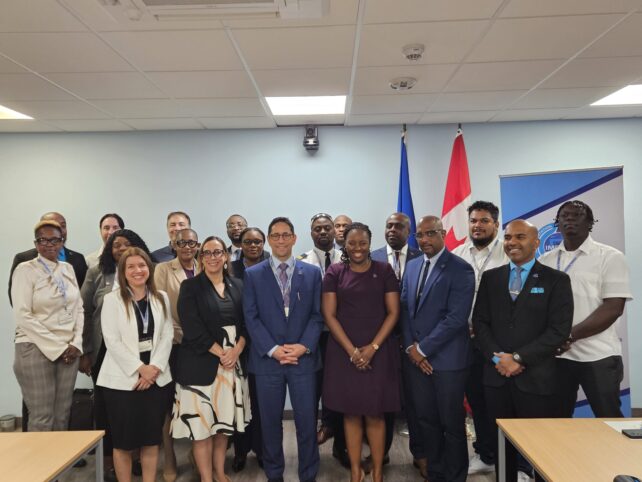
A high-level, strategic workshop focusing on the illegal trafficking and smuggling of glass eels—often associated with transnational organized crime—was officially inaugurated on November 20, 2025, in Bridgetown, Barbados. A media statement shared that the gathering brought together representatives from law enforcement, customs, fisheries, and environmental protection agencies across the Caribbean to enhance their investigative capabilities.
CARICOM IMPACS reported that during the opening remarks, Ms. Nadine Bushell, Assistant Director of Projects at CARICOM IMPACS, issued a stark warning about the evolving tactics of criminal organizations. She emphasized that these groups are exploiting gaps in knowledge concerning natural resource and environmental crimes to avoid detection. She pointed out that such illegal activities are increasingly intersecting with other serious transnational crimes, posing a significant threat to the Caribbean region.
“At CARICOM IMPACS, we have observed a troubling acceleration in transnational organised criminal networks exploiting the Region’s natural resources for profit. The extremely high value of glass eels in the global market has made this a lucrative commodity that has been set upon by criminal actors who target these low-risk and high-value commodities as they diversify their criminal activities beyond the well-known crimes that law enforcement typically monitor and scrutinise”, she explained.
Ms. Bushell reiterated IMPACS’s commitment to safeguarding the Caribbean’s natural wealth, highlighting that combating environmental crimes and illegal resource extraction requires enhanced regional cooperation. She stressed the importance of a unified, collective response to counteract these illicit activities effectively.
Her Excellency Brenda Wills, the High Commissioner of Canada to Barbados and the Eastern Caribbean, underscored the global scale of the problem, noting that the illegal eel trade is valued at up to US$3 billion annually. She observed that the Caribbean has become a significant hub for capturing and illegally exporting eels, often destined for Asian markets through North America.
“This illicit trade threatens biodiversity, undermines legal economies and erodes the rule of law. Canada recognises the importance of regional cooperation in tackling these crimes and is proud to support initiatives like this workshop – which help to strengthen intelligence sharing, build capacity and fosters collaboration across borders”, she stated.
The High Commissioner emphasized that fighting wildlife trafficking necessitates a comprehensive approach, involving strong legislation, effective enforcement, and transparent reporting mechanisms. Public education and awareness are also crucial to prevent these crimes from thriving unnoticed.
Dr. David Soud, a Subject Matter Expert at Auxilium Worldwide and the facilitator of the workshop, pointed out that despite their small size, eels are vital components of aquatic ecosystems worldwide. They serve as both prey and predators at different life stages. He explained that eels are highly valued, particularly in Asia, where over 150,000 tonnes are consumed annually, including in sushi restaurants globally.
“The challenge for us here in the Caribbean is that this demand for eels has driven multiple species onto endangered lists. In the past few decades, we have seen a cascading decline in eel species. The illicit trade in eels is a highly lucrative, multi-million-dollar criminal enterprise spanning the Caribbean, with estimates for the Region’s total trafficking volume ranging from 20 to over 100 tonnes annually” he revealed.
According to the release, this illegal activity is mainly concentrated in countries such as Cuba, the Dominican Republic, Haiti, and Jamaica. The financial incentives are significant—glass eels can fetch up to US$5,000 per kilogram on local markets before being concealed in warehouses. They are then exported through North America, especially the United States and Canada, for re-export to Hong Kong and Asian eel farming industries, with prices multiplying along the supply chain.
Dr. Soud also reportedly highlighted that the high financial stakes and complex logistics of this trade have attracted organized crime groups (OCGs), many of which are involved in trafficking drugs, weapons, and humans. The report also said that these criminal networks coordinate the entire process—from harvesting to transportation and money laundering. Importantly, the legitimate global eel market, valued in the billions, is exploited by these groups, allowing them to launder proceeds from both illegal eel trade and other criminal enterprises.
The workshop’s primary goal was to equip CARICOM IMPACS and its partners with the agility and tools necessary to combat this illicit trade effectively.
“CARICOM IMPACS is uniquely suited to address this challenge, because to take on criminal networks, we need well-networked law enforcement and security agencies. We plan to emerge from this workshop better informed and better equipped to undertake this important work,” he stated.
The program includes sessions on new tactics used by traffickers, financial data analysis to trace illicit profits, and case studies of successful international interventions. Participants from across CARICOM member states engage in a coordinated effort to address trafficking routes and enforcement hurdles across different jurisdictions.
Disclaimer: The comments posted do not necessarily reflect the views of DominicaNewsOnline.com and its parent company or any individual staff member. All comments are posted subject to approval by DominicaNewsOnline.com. We never censor based on political or ideological points of view, but we do try to maintain a sensible balance between free speech and responsible moderating.
We will delete comments that:
See our full comment/user policy/agreement.