




Disclaimer: The views, and claims, expressed in this article are solely those of the author and do not necessarily represent the views of Duravision Inc., Dominica News Online, or any of its subsidiary brands.
“Heritage is our legacy from the past, what we live with today, and what we pass on to future generations.”- U.N.
What images are conjured when you hear the word heritage? The United Nations Educational, Scientific and Cultural Organization (UNESCO) defines heritage as the cultural, historical and social legacies passed down through generations. UNESCO adds that from cherished historic monuments and museums to living heritage practices and contemporary art forms, culture enriches our lives in countless ways and helps build inclusive, innovative and resilient communities. The definition of heritage is rather wide-ranging. Passing down legacies is one part of the equation. The protection of these legacies for future generations is equally important.
As a result, protecting and safeguarding the world’s cultural and natural heritage and supporting creativity and dynamic cultural sectors are fundamental to addressing the challenges of our time, from climate change to poverty, inequality, the digital divide and even more complex emergencies and conflicts.
World Heritage Day is observed annually on April 18. The day is officially known as the International Day for Museums and Sites and bears witness to the cultural legacy passed down through generations, alongside the shared responsibility to safeguard this heritage for future populations. World Heritage Day (International Day for Monuments and Sites) was first established on April 18, 1982, by the International Council on Monuments and Sites (ICOMOS).
The theme for this year’s World Heritage Day is theme “Emergency Response for Living Heritage in Contexts of Conflicts and Disasters”
This initiative highlights the urgent need to protect, preserve, and manage cultural and natural sites facing threats from climate change, war, and urbanization.
Often, we view heritage sites as mere tourist attractions. However, this narrative needs to change. Heritage is a living entity and should be viewed as such. Heritage sites represent our history, identity and collective memory. This year’s theme is a timely reminder of the need for global action to protect heritage sites that are under threat from wars, climate change and other calamities.
It is important that youth involvement and engagement be part of the arsenal to protect our heritage sites. Our youth must be made aware of the importance of these sites to their own personhood and self-identity. More educational trips are needed to heritage sites. Heritage sites are repositories of knowledge and history.
The national curriculum must ensure that this is done across the educational landscape. We must be intentional in bringing awareness of our heritage sites to the next generation.
The loss of these heritage sites is immeasurable. Any loss or destruction of heritage sites is a loss for humanity.
Heritage sites often serve as that glue for community belonging and bonding. Heritage sites are spaces where we can connect or in some instances reconnect to architectural wonders and craftsmanship.
UNESCO World Heritage Designation
A UNESCO World Heritage Site is a location such as a building, city, complex, or natural landscape recognized for having Outstanding Universal Value (OUV) to all humanity. To qualify, sites must meet at least one of ten specific cultural or natural criteria, demonstrate authenticity and integrity, and have a robust management plan to ensure long-term protection.
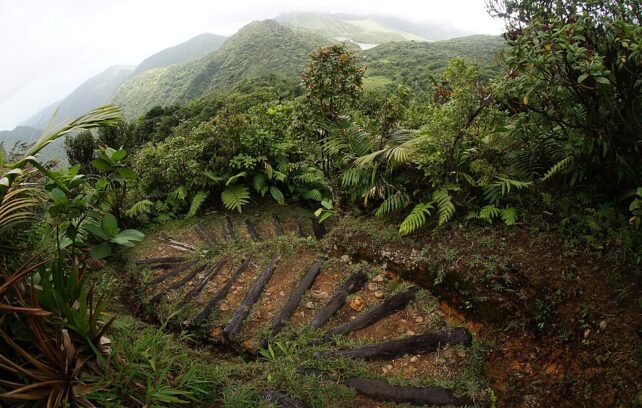
The Caribbean boasts several UNESCO World Heritage Sites. Among the key sites are Port Royal and the Blue and John Crow Mountains in Jamaica. Additionally, The Morne Trois Pitons National Park in Dominica as well as the Historic Bridgetown and its Garrison in Barbados. There is also Pitons Management Area, in St. Lucia. Antigua’s Naval Dockyard. The Historic Area of Willemstad, in Curacao and Alejandro de Humboldt National Park in Cuba. What makes the concept of World Heritage exceptional is its universal application. World Heritage sites belong to all the peoples of the world, irrespective of the territory on which they are located.
On this World Heritage Day, let us join forces to respect our heritage sites. Additionally, let us come together to highlight the rich tapestry of cultural diversity and the efforts required in preserving our monuments, traditions and archeological locations.
In the words of Nelson Mandela, our rich and varied cultural heritage has a profound power to help build our nation.
Wayne Campbell is an educator and social commentator with an interest in development policies as they affect culture and or gender issues.
[email protected]
@WayneCamo
Why there’s no disclaimer on this article?
‘What makes the concept of World Heritage exceptional is its universal application. World Heritage sites belong to all the peoples of the world, irrespective of the territory on which they are located.’
People of the world, there are World Heritage sites in Dominica under threat.
They belong to all of you – protect them!
ADMIN: Leaving out the disclaimer was an oversight. It has since been added.
Our heritage defines who we are as a people. It goes us a sense of kinship and affinity, and helps to shape the future.
In Dominica, we have inherited a proud history of resilience from our forebears. Also, our unique cultural traditions, colloquial languages, monuments, and the environment we should pass on to future generations. These are like gifts from those who have gone before us.
Our heritage is lie the rots of a tree. Though new branches on a tree at grow in different directions, yet they are all connected (indirectly) to the roots. The present generation is connected to the habits, characteristics and ways of our ancestors.