




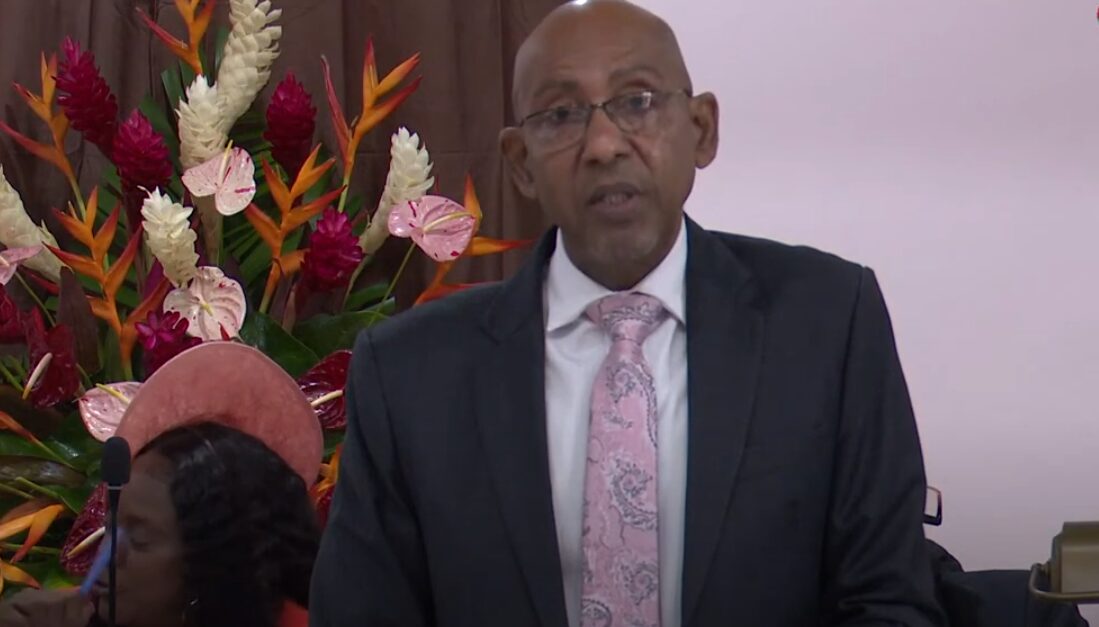
Finance Minister Dr. Irving McIntyre has announced major Value Added Tax (VAT) and import duty cuts on a number of essential food items in Dominica.
During his presentation of the National Budget for the Fiscal Year 2025/2026 last week, he said that the changes will take effect on October 1, 2025.
According to him, the government is fully aware of its citizens’ concerns regarding the rising cost of living and has taken firm, targeted action to provide relief where it matters most.
“One measure we have implemented is the removal of customs duties and Value Added Tax (VAT) on a range of essential food items,” he said. “This policy is designed to ease the financial burden on households by reducing the cost of basic goods that form part of the daily diet of our people.”

The minister highlighted the list of items currently benefiting from these exemptions. That is, ‘Food items with no import duty’ chicken-backs and necks, rice, chicken- wings, oats, codfish, cream of wheat, herring, cooking oil, salted mackerel, sausage, milk, canned sardines, butter, canned mackerel, cheddar cheese, canned tuna, garlic, sugar, onion, pasta, spilt peas, couscous, red kidney beans, margarine, lentils, cereal (cornflakes, raisin bran), green tea, apple juice, black tea, infant formula, and flour.
He also listed the food items not subject to VAT. These include: milk, flour, rice, sugar, infant formula, locally produced agricultural products, and locally produced bread and food items.
“To continue supporting families across the country, we will be expanding the list of exempted items in the upcoming financial year for a period of six months,” he stated.
The public will see the exemption of Value Added Tax expand to: blackeye peas, lentils, pigeon peas (cajanus cajan), cream of wheat, cornmeal, oats, luncheon meat, canned corned beef, canned herring, canned mackerel, cereals (wheat, bran, etc), biscuits, unsweetened orange juice, tomato ketchup, toothpastes, laundry detergent, toilet paper and sanitary napkins, almond milk and soy milk.
Meanwhile, Dr. McIntyre encourages the public to examine their consumption habits.
“While government has taken steps to ease the burden, there are additional ways in which we, as individuals and households, can reduce expenses,” he said. “One such measure is the revitalization of backyard gardening, which can provide fresh vegetables and herbs year-round, lower food bills, and promote healthier eating.”
He continued, “We also encourage citizens to purchase local produce which is often more affordable and fresher than imported alternatives.”
He further affirmed that the government will continue to implement policies to ease the financial pressure on the public.
“We, as citizens, must build a culture of financial mindfulness, resourcefulness, and community cooperation,” Dr.McIntyre urged. “It is this collective effort that will make our society more resilient and better equipped to withstand global economic pressures.”


Mr Minister it is NOT important duties which makes things expensive in Dominica.It is the GREED of the people importing the items.A $1,000,us TV will cost more than $2,000us in Dominica.What the government has to do is employ price control officers to enforce the law.The level of greed in Dominica is destroying the country.1lb of sweet potatoes $5,1lb of dasheen $5,1lb of shoe $5,1lb of fig $5.Soursop $5mango,watermelon even zamman and wayzen $5.Everybody doing what they want,and the government not doing bull about it.I seen shoes for $5 and 7 on Jerome AVE in The Bronx $100ec in Dominica,greedy they greedy.
Given that the “resilient housing revolution” has created urban houses that lack yard space in Dominica’s predominantly rural setting, it will be difficult for the “key holders” to revitalization the culture of backyard gardening.