




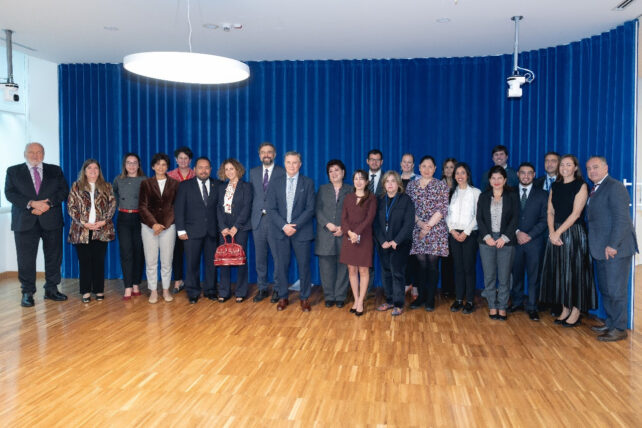
The roundtable, titled “Agricultural and Rural Development Cooperation in the Americas – Opportunities for IFAD and IICA,” saw participation from representatives of countries including Argentina, Bolivia, Brazil, Costa Rica, Cuba, the Dominican Republic, El Salvador, Haiti, Honduras, Mexico, Panama, Paraguay, and Peru. These representatives provided valuable insights and recommendations regarding the priorities of IFAD and IICA, aiming to accelerate and expand the initiatives of both organizations.
The partnership between IFAD and IICA dates back to 1987, when they first formalized their collaboration to improve the living conditions of rural populations in Latin America and the Caribbean. During the recent discussions, Katherine Meighan, IFAD’s Chief Legal and Governance Officer, facilitated the dialogue among the ambassadors from the Group of Latin American and Caribbean Countries (GRULAC). Ambassador Cavallari emphasized the importance of fostering synergies among regional organizations and highlighted the need for improved access to credit for rural communities, which is essential for adopting new technologies.
Efrén Arnoldo Bernal, the Ambassador of El Salvador and current Chair of GRULAC in Rome, praised the efforts of IICA and recognized the ambassadors as key allies in achieving shared goals, particularly in enhancing food security and supporting farmers in the region. Paraguay’s Ambassador, María José Argaña, underscored the critical role of institutions like IICA, IFAD, and IILA in her country, advocating for a focus on rural women who are vital to agricultural production and family sustenance.
Additionally, Ambassador Carla Carneiro of Brazil highlighted the urgent need to address climate change through targeted actions and adaptation strategies. She pointed out the necessity of facilitating credit access for women in climate-affected areas, particularly in Brazil’s Northeast, and shared her country’s experience in water resource management. Representatives from Panama and Guatemala, Tomás Duncan Jurado and Olga María Pérez Tuna, respectively, called for enhanced support and training for indigenous farmers and rural communities facing climate-related challenges, emphasizing the need for comprehensive assistance in these vulnerable areas.
Disclaimer: The comments posted do not necessarily reflect the views of DominicaNewsOnline.com and its parent company or any individual staff member. All comments are posted subject to approval by DominicaNewsOnline.com. We never censor based on political or ideological points of view, but we do try to maintain a sensible balance between free speech and responsible moderating.
We will delete comments that:
See our full comment/user policy/agreement.