




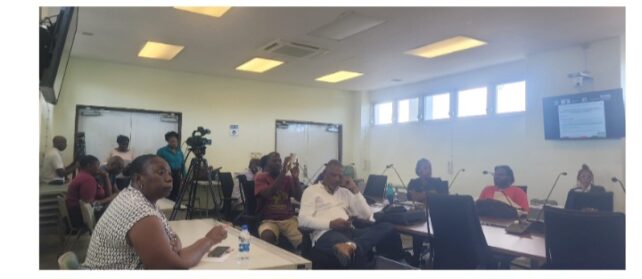
The Inter-American Institute for Cooperation on Agriculture (IICA) and the Food and Agriculture Organization (FAO) have reaffirmed their dedication to promoting agricultural innovation and fostering regional partnerships by hosting the inaugural virtual symposium titled “Next Generation Sweet Potato Production in the Caribbean – Annual Project 2025.”
The online event, conducted via Zoom on Tuesday, October 15, 2025, gathered over 90 participants from across the Caribbean, ranging from the Bahamas to Suriname. Attendees included technical specialists, government officials, farmers, and research collaborators from 13 Caribbean nations, all focused on exploring ways to leverage genetic diversity in plants and soil microbes to enhance sweet potato cultivation in Antigua and Barbuda, Jamaica, and St. Lucia.
IICA reported via media release that funding for this initiative comes from the FAO International Treaty on Plant Genetic Resources for Food and Agriculture Benefit-sharing Fund, with additional support from the European Union. The project is coordinated by IICA in partnership with the Caribbean Agricultural Research and Development Institute (CARDI) and the Ministries of Agriculture of Antigua and Barbuda, Saint Lucia, and Jamaica.
During his opening address, Gregg Rawlins, IICA’s Representative for the Eastern Caribbean States, emphasized that the project aligns with CARICOM’s 25 by 25+5 initiative, which aims to cut regional food imports by 25 percent by the year 2030.
 “By facilitating access to high-quality, disease-free planting materials and introducing varieties that are tolerant to stress and resistant to pests, this initiative is contributing to a more resilient and self-sufficient Caribbean,” Mr. Rawlins explained. “It’s about more than boosting productivity; it’s about empowering women, youth, and persons with disabilities to take leadership roles in transforming our agricultural landscape for future generations.”
He also reportedly praised the efforts of project teams in Antigua and Barbuda, Jamaica, and Saint Lucia, acknowledging their progress in establishing a community of practice and advancing research on virus-free cultivars and biocontrol methods targeting the sweet potato weevil, Cylas formicarius.
Representing FAO, Juan Cheaz, Trade and Markets Officer and Acting FAO Representative in Barbados, highlighted the crop’s importance due to its versatility and resilience, stating,“Sweet potato thrives in our soils, withstands drought and heat, and provides vital nutrients to our communities.”
“It connects directly to our goals for food security, climate resilience, and inclusive rural development. To unlock its full potential, we must ensure that farmers have consistent and reliable access to clean planting materials. This is the foundation of productivity”, he added.
Cheaz reaffirmed FAO’s ongoing commitment to collaborating with IICA, the International Potato Centre (CIP), and Caribbean nations to strengthen seed systems, promote innovation, and turn knowledge into practical benefits for farmers and consumers.
Gregory Bailey, Antigua and Barbuda’s Director of Agriculture and Chair of the Project Steering Committee, reflected on the historical significance of sweet potato in the region.
“Sweet potato is more than just a crop; it embodies resilience, cultural heritage, and sustenance for our communities,” Bailey noted.“Today’s symposium is not just about reflection but renewal to strengthen collaboration and foster a Caribbean community of practice, where knowledge and innovation flow freely. We are building more than a network; we are cultivating a shared vision for sustainable agriculture.”
The release said that the event featured a keynote speech from Dr. Alexandre Mello, a Genetic Resources Scientist at CIP, who presented insights into sweet potato genetic diversity and its potential to tackle global food security and climate challenges.
Sessions during the symposium focused on utilizing plant and microbial genetic resources within the Next Generation Sweet Potato Project. Presentations from national teams highlighted the progress made in the first year, and breakout discussions addressed topics like biocontrol of sweet potato weevils and genetic resource management, fostering exchange of experiences and collaborative strategies to expand research and farmer participation.
Since its inception between October 2024 and February 2025, the Next Generation Sweet Potato Project has identified 12 farmer-preferred cultivars in Antigua and Barbuda, as well as Saint Lucia, for virus cleaning and conservation. IICA reported that efforts are also underway to identify native strains of fungi used for biocontrol of sweet potato weevils and to conduct baseline surveys to inform field evaluations in Jamaica. Over 100 technicians have received training in clean seed systems, biocontrol techniques, and seed system management, bolstering regional capacity for innovation.
I strongly support this project aimed at improving sweet potato production in the Caribbean—it’s a fantastic initiative with significant potential for regional food security and nutrition.
However, I’m disappointed that Dominica is not among the countries listed for implementation. I’ve been actively encouraging local officials here to shift focus away from white (Irish) potatoes and toward expanding the production and consumption of sweet potatoes, which offer a far superior nutritional profile and a lower glycemic impact.
Sweet potatoes—especially the orange-fleshed varieties—are rich in beta-carotene (a precursor to vitamin A), fiber, and antioxidants, and their lower glycemic index makes them a better choice for blood sugar management.
Given Dominica’s agricultural potential and ongoing efforts to promote climate-resilient, nutritious crops, I hope the authorities here will take the appropriate steps to have Dominica included in future phases.