




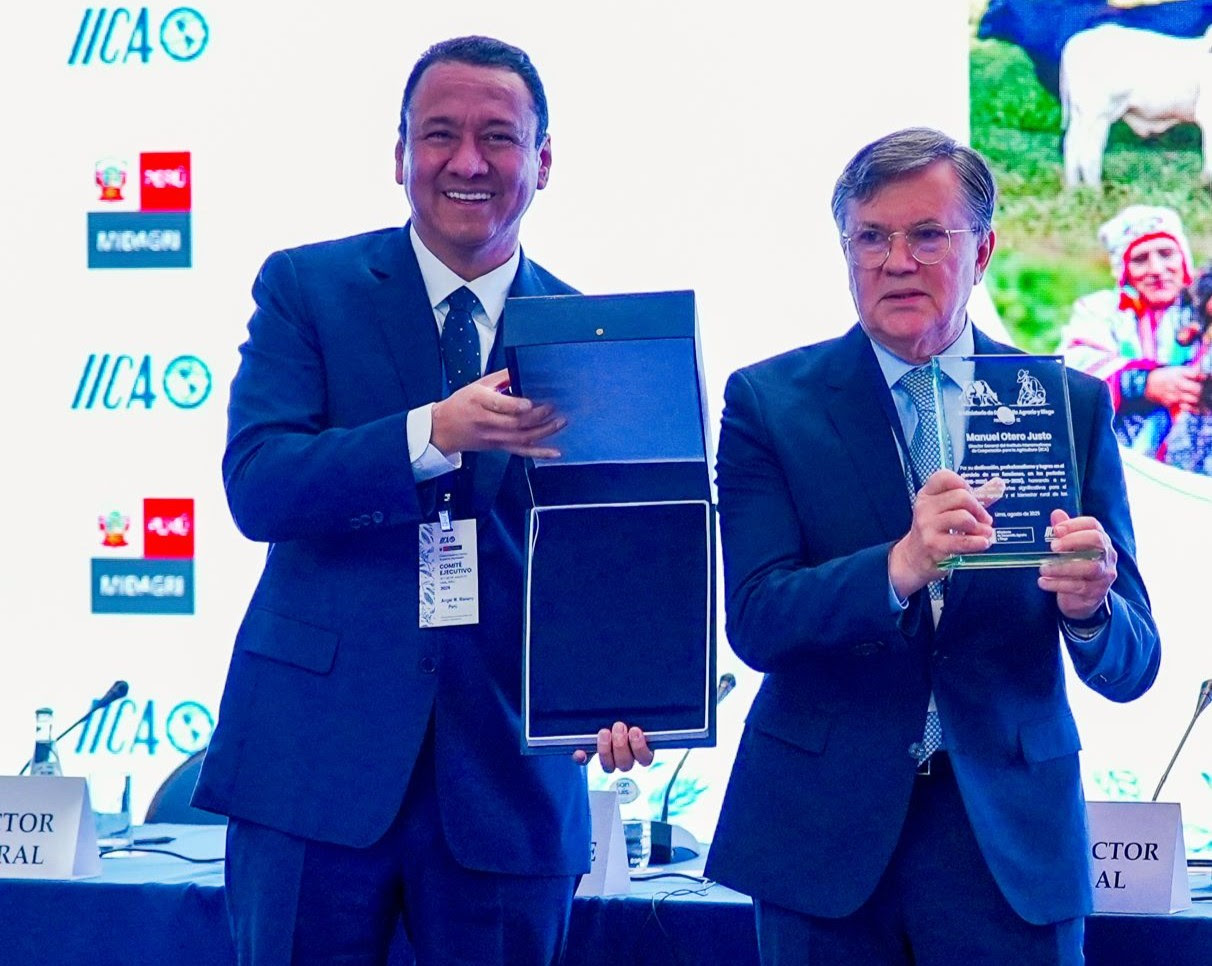
The 45th Annual Session of the Inter-American Institute for Cooperation on Agriculture’s (IICA) Executive Committee was officially inaugurated by senior officials and ministers from the agricultural sectors across the Americas. According to an IICA release, the opening featured a unified message emphasizing the crucial role of animal agriculture in fostering economic growth throughout the hemisphere and strengthening global food security. Dominica was represented by Fisheries Minister Jullan Defoe.
During the first day’s proceedings, representatives from various nations concurred that the production and consumption of nutrient-dense animal-derived foods—such as meat, dairy, and eggs—are fundamental components of both regional and international food systems.
The event was formally kicked off by Ángel Manero Campos, Peru’s Minister of Agricultural Development and Irrigation, alongside Manuel Otero, IICA’s Director General. The two-day gathering in Lima assembled a diverse group of participants, including private sector leaders, agricultural research organizations, delegates from observer countries, representatives of international agencies, and diplomatic officials accredited in the region.
The IICA Executive Committee, which convenes annually, serves as the strategic guiding body overseeing agricultural development and rural well-being initiatives in the Americas. Its responsibilities include shaping the organization’s technical cooperation projects across the hemisphere. Comprising twelve member states elected for two-year terms, the committee’s composition ensures a balance of geographic representation and rotation.
Among the other ministers present in Lima were: Víctor Carvajal from Costa Rica; Indar Weir from Barbados; Laura Suazo from Honduras; María Fernanda Rivera from Guatemala; and Saboto Caesar from Saint Vincent and the Grenadines. Additionally, ministers Floyd Green from Jamaica; Luis Alfredo Fratti from Uruguay; Martha Carvajalino from Colombia; and Zulfikar Mustapha from Guyana participated remotely.
At the opening ceremony, Minister Manero presented a commemorative plaque to Otero on behalf of the Peruvian government, acknowledging his leadership in advancing agricultural productivity, sustainability, and rural retention.
Members of the current IICA Executive Committee include Argentina, Bolivia, Mexico, Panama, Paraguay, Saint Lucia, and the United States. Delegations from Brazil, Canada, El Salvador, Grenada, and the Dominican Republic also attended the event.

Reflecting on IICA’s long-standing commitment, Manero Campos underscored the organization’s more than eight decades of dedicated work in promoting rural development, regional integration, and agricultural trade, along with its contributions to global food sustainability.
He noted, “Since 1942, IICA has been the main joint institutional platform for agriculture for the countries in this hemisphere and we have reaped tangible benefits through our membership in the organization. We have experienced difficult years and prosperous years, but IICA has always been by our side”.
He further emphasized Peru’s deep-rooted agricultural heritage, stating,“Peru has been an agricultural country from its birth. One third of the economically active population works in agriculture and therefore it is an extremely important sector for the country. We have a tradition of livestock production, and we produce crops found nowhere else in the world”.
Manero Campos highlighted the need for Latin America and the Caribbean’s livestock sector to prioritize sustainability and recognize small farmers’ contributions. “If we want to continue improving, we need innovation, technology, and knowledge. The support of IICA is essential in all these areas”,
Otero provided a brief update on IICA’s ongoing initiatives related to sustainable livestock, developed in partnership with strategic allies across the region. “Livestock farming,” he explained, “is one of the pillars of our economies. It accounts for 50% of agricultural GDP and involves an important social dimension, given that 38 million farmers depend on it for their livelihood. There are unequivocal signs that the global demand for food of animal origin will continue to increase up to 2050. No one can afford to miss this opportunity”.
He urged regional nations to develop a long-term vision for the next 25 years:
Otero also praised the collaborative drafting of a joint statement by American countries emphasizing the significance of animal production—a testament to the region’s unity and shared priorities: “In our agriculture sector, we must make the changes we ourselves decide to make with science and innovation, not those others try to impose on us from the outside”.
Throughout the meeting, high-level discussions took place across five technical panels, featuring researchers, academics, industry representatives, and policymakers. Topics ranged from technological innovations and economic aspects to trade, environmental concerns, and animal health within livestock systems across the Americas.
Consensus emerged around principles supporting healthy, productive, and environmentally responsible animal farming. Participants committed to increasing the supply of safe, nutritious, and traceable animal foods and advancing science-based livestock practices tailored to regional contexts.
Discussions also focused on equipping producers with tools to meet rising global demand while conserving natural resources. Emphasizing innovation, delegates highlighted improvements in genetics, nutrition, veterinary medicines, and digital technologies—all of which should be science-driven and adapted to local needs.
Countries shared successful experiences with livestock systems that deliver environmental benefits and ecosystem services, alongside economic resilience. The importance of trade was underscored, recognizing its vital role in food security and economic growth. The group also stressed that animal health must remain a political and technical priority, as safeguarding animal well-being reduces poverty, protects public health, and sustains rural livelihoods.
On the subsequent day, three candidates vying for the position of IICA Director General for the 2026–2030 term presented their visions: Muhammad Ibrahim of Guyana; Laura Suazo of Honduras; and Fernando Mattos of Uruguay.
The agenda also included updates on ongoing projects, notably the Hemispheric Partnership for Food Security and Sustainable Development, as presented by IICA in 2023, along with progress reports on initiatives like the Living Soils of the Americas program and the Hemispheric Fund for Agricultural Resilience and Sustainability (FoHRSA). The latter has already secured an initial two-million-dollar investment to support six strategic projects.

Disclaimer: The comments posted do not necessarily reflect the views of DominicaNewsOnline.com and its parent company or any individual staff member. All comments are posted subject to approval by DominicaNewsOnline.com. We never censor based on political or ideological points of view, but we do try to maintain a sensible balance between free speech and responsible moderating.
We will delete comments that:
See our full comment/user policy/agreement.