




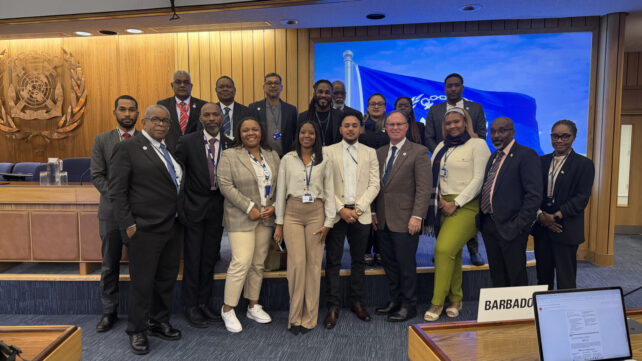
At the conclusion of the recent International Maritime Organization (IMO) meetings in London, Member States wrapped up two weeks of negotiations under the 21st Intersessional Working Group on Greenhouse Gases (ISWG-GHG 21) and the 84th session of the Marine Environment Protection Committee (MEPC 84), from April 20–24, and April 27 to May 1, respectively.
The discussions centred on the proposed Net Zero Framework (NZF), a global regulatory package aimed at reducing greenhouse gas emissions from international shipping. Governments tackled the issue of how ships will cut emissions in the future—through cleaner fuels, stricter efficiency standards, and potentially a global carbon pricing mechanism.
While technical work progressed, Member States remain divided on its structure—particularly the balance between technical fuel standards and the proposed emissions pricing mechanism, which reflected a lack of consensus under IMO’s traditional decision-making approach.
A large coalition of Member States—including many European Union countries, several Pacific Island States, and countries such as Mexico and Brazil—expressed strong support for adopting the Net Zero Framework in its current form. This group advocated for maintaining both core pillars of the proposal: the technical fuel standard and the greenhouse gas (GHG) pricing mechanism. Their position was that this combined approach is necessary to ensure environmental integrity, global consistency, and alignment with the IMO’s 2023 GHG reduction strategy.
In contrast, another grouping led prominently by the United States and Saudi Arabia, along with several aligned delegations, raised significant concerns regarding the proposed economic structure of the framework. This bloc questioned the introduction of a mandatory pricing mechanism for emissions and instead supported either a more limited technical compliance approach or alternative frameworks that reduce or remove the proposed financial elements.
A further set of proposals emerged from countries including Liberia, Argentina, and Panama, which advocated for a more flexible, “technical-first” model focused on fuel intensity standards, with limited reliance on global pricing mechanisms. Japan also introduced a modified approach that retained the broader Net Zero Framework concept but proposed adjustments, including a stronger emphasis on direct compliance metrics and revisions to the proposed revenue and fund distribution elements.
Ms. Nafesha Richardson, Project Manager of the University of the West Indies Caribbean Shipping Lanes Project, highlighted the constructive and consistent engagement of Caribbean delegations throughout the process.
According to Ms. Richardson, their approach focused on balancing climate ambition with the economic realities faced by vulnerable states, particularly Small Island Developing States (SIDS).
“Caribbean delegations played a constructive role throughout these negotiations, emphasizing that climate ambition and economic realities must be addressed together, particularly for climate-vulnerable Small Island Developing States. UWI-CSL remains committed to continuing its support to the region through technical analysis, strategic guidance, and capacity support aimed at advancing a just and equitable maritime transition,” she asserted.

Within this context, Dominica’s Permanent Representative to the IMO, Ambassador Benoit Bardouille, stressed that any final agreement must be practical and responsive to the operational realities of island states.
He underscored that while environmental ambition is supported, implementation must remain realistic for countries with limited access to alternative fuels and constrained infrastructure. He stated:
‘’Our support for the advancement of the Net Zero Framework is contingent on guidelines that reflect the realities of SIDS, such as limited fuel access. While Greenhouse Gas Fuel Intensity (GFI) and lifecycle assessments must be robust, they must remain practical and allow for Just and Equitable Transition eligible awards. A just transition must manage change while allowing our nations to participate in the benefits of the emerging green fuel economy.’’
Other Caribbean and international voices echoed similar themes during the negotiations.
Several delegations, including Jamaica and Antigua and Barbuda, stressed the importance of a unified global framework to avoid fragmented regional rules and to ensure that climate measures do not disproportionately impact small and vulnerable economies.
Industry representatives also reinforced the need for clear regulatory signals to guide investment and support an orderly transition, while maintaining focus on equity and implementation support for developing states.
Overall, the meeting did not produce a final adoption of the Net Zero Framework; Member States did not reach final agreement, and further negotiations will now continue later in the year.
To address these outstanding issues, additional intersessional meetings are scheduled for September and November 2026, to narrow differences and advance toward a final agreement expected at MEPC 85 and related sessions later in the year.

Disclaimer: The comments posted do not necessarily reflect the views of DominicaNewsOnline.com and its parent company or any individual staff member. All comments are posted subject to approval by DominicaNewsOnline.com. We never censor based on political or ideological points of view, but we do try to maintain a sensible balance between free speech and responsible moderating.
We will delete comments that:
See our full comment/user policy/agreement.