




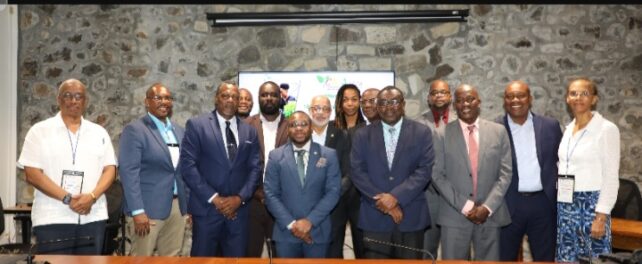
On October 9, 2024, the OECS Council of Ministers for Agriculture convened for their annual meeting as part of the 18th CARICOM Caribbean Week of Agriculture, held in St. Vincent and the Grenadines. This year’s gathering marked the first time farmers, agro-processors, and retailers were invited to participate in discussions regarding the pressing issues and requirements facing the agricultural sector. The goal of this inclusive forum was to elevate the perspectives of those actively involved in agriculture, promoting a cooperative strategy for sustainable development. Attendees included representatives from the Caribbean branches of the UN Food and Agriculture Organization (FAO) and the Inter-American Institute for Cooperation on Agriculture (IICA).
“We thought that to put some context into our discussion, and for us to always bear in mind that we are not here to look after our needs, we are here to look after the needs of our people, it is extremely important that we find a way to engage them in our discussions…Say to us what you would like us to do, say to us what you think that we are doing that we should not be doing, or what we’re doing that we should continue to do, or what you think we are supposed to be doing but we are not doing,” stated Chair of the OECS Council of Ministers for Agriculture and Minister for Economic Development, Planning, Agriculture & Lands, Forestry, Marine Resources & Cooperatives, Hon. Lennox Andrews in his welcome remarks.
Director General of the OECS, Dr. Didacus Jules, echoed these sentiments, affirming the importance of contribution from all agriculture stakeholders in the work of the OECS Food and Agricultural Systems Transformation (FAST) Strategy.
“Your input helps to enrich the discussion and tends to keep us real in the decisions that we need to make,” said Jules.
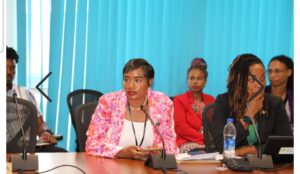 During the discussions, individual farmers, along with the executive director of Helen’s Daughters—a collective of female farmers from Saint Kitts and Nevis, Saint Lucia, and Saint Vincent and the Grenadines—voiced similar concerns. They sought acknowledgment as essential contributors to agricultural development and sustainability. Additionally, they collectively advocated for mental health and trauma assistance for individuals impacted by climate change and the uncertainties of modern farming practices. A significant demand from the farmers was for improved access to affordable, cultivable land, which is vital for boosting productivity and ensuring food security in the region.
The OECS Commission also provided an update on the Youth in Agriculture Programme, highlighting efforts to involve younger individuals in agricultural activities and entrepreneurship. This initiative is designed to equip youth with the necessary skills and resources to enhance food security.
Furthermore, IICA representative Allister Glean introduced a proposed agricultural insurance framework tailored for regional farmers, aimed at providing financial safeguards against the growing unpredictability of agricultural challenges. The OECS Council of Ministers for Agriculture is dedicated to addressing stakeholder concerns and promoting collaboration to create a sustainable agricultural future for the region.
Recognizing the importance of farmer participation in a ministerial gathering, the Honorable Saboto Caesar, who serves as the Minister of Agriculture, Forestry, Fisheries, Rural Transformation, Industry, and Labour in Saint Vincent and the Grenadines, stated:
“I want to recognise the farmers who are here and also their hard work and dedication…Without the farmers we would not have production, without the farmers, we won’t have food, and it is as simple as that.”
I see you all there in your likkle euro jackets, no one dear wear Afro shirts that make black men look exquisite/respectable. However, be mindful of the Bill Clinton statement where he claims to regret causing (bullying) Haiti to remove tariffs on rice, witch caused farmers out, boosted the elite (importer$) and rendered the people unable to feed themselves. A simple targeted policy shift with precision. I didn’t make this up its out there on YouTube, do your own research.
These regional organizations and governments like to use these quixotic terms – resilience, transformative, biodiversity, etc. These are just used to impress the impressionable minds.
After all these high level meetings, conferences, symposiums nothing filters down to the struggling poor to lift their standard of living. Just a merry dance.