




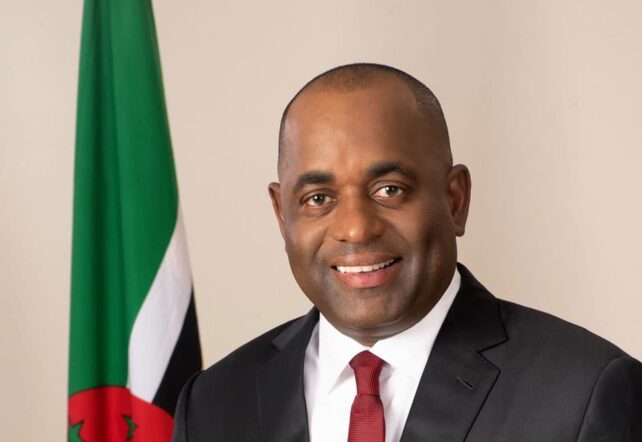
Prime Minister Roosevelt Skerrit revealed that during the CARICOM Heads of Government meeting held in February, the importance of regional cooperation and international partnerships in addressing shared challenges within the Caribbean was a highlight.
In recent discussions with the Dominican media, Skerrit recounted some of the key engagements and decisions taken by the region’s leaders, emphasizing their commitment to solidarity—particularly with Cuba in its time of need.
As Skerrit put it, “I felt that those discussions went very well.”
It was during these exchanges that the humanitarian situation in Cuba was brought into focus.
“Cuba has been good to all of us in the Caribbean,” Skerrit noted, emphasizing the region’s sense of moral and “Christian duty” to assist its neighbor in times of crisis.
Recognizing Cuba’s current hardships as a result of the U.S. blockade on oil importation, the PM indicated that CARICOM made a collective decision to join forces and provide humanitarian support to the government and people of Cuba.
In a significant move, CARICOM contacted the government of Mexico to coordinate its response.
According to the prime minister, the Mexican government, led by President Claudia Sheinbaum Pardo, responded swiftly, granting authorization for CARICOM to engage in collaborative efforts to deliver aid.
“We thank the President of Mexico for endorsing the proposal to coordinate our response with Mexico in terms of logistics.”
Beyond humanitarian aid, the leaders also discussed broader geopolitical shifts and their implications for the Caribbean.
Skerrit acknowledged the complexities involved: “We all recognize that it is important for us, as far as practically possible, to coordinate our approach to some of those challenges.”
While he conceded that achieving total unity might be difficult, he maintained that the overarching goal remains clear—working together as much as possible to navigate global uncertainties.
“It is a noble thing, as far as practically possible, to coordinate as CARICOM our response and approach to many other issues.”
When pressed on the purported change in health agreement between Cuba and Dominica, Skerrit asserted that in the foreseeable future, external medical help will be necessary for the healthcare system on the island, adding that the current staff will remain in their positions.
“They will continue to be engaged, and they will remain in Dominica. And so nobody has been sent home as some have intimated, and there will be an end of the program. I mean, there is no secret that we have had a longstanding, mutually beneficial relationship with the Republic of Cuba,” remarked Skerrit.
Though stated that there are discussions in the works with Nigeria, India, and Ghana concerning medical personnel, he was quick to add that, in his estimation, the attitude towards Cuba and its government will not shift.
Instead, the prime minister claimed that the issues of both sides will continue to be worked upon in order to provide support.
Skerrit just tell the oppressors in Cuba to call general election.. let the people decide to choose their government and life will be sweeter than before.
you mean the same mexico whose president said that the drug cartels “who are actively in open conflict against the police and defense forces of mexico ” have human rights so she is not going to unleash the military on them
the same cartels that leave body parts in bags and hang bodies of bridges to mark there territory