




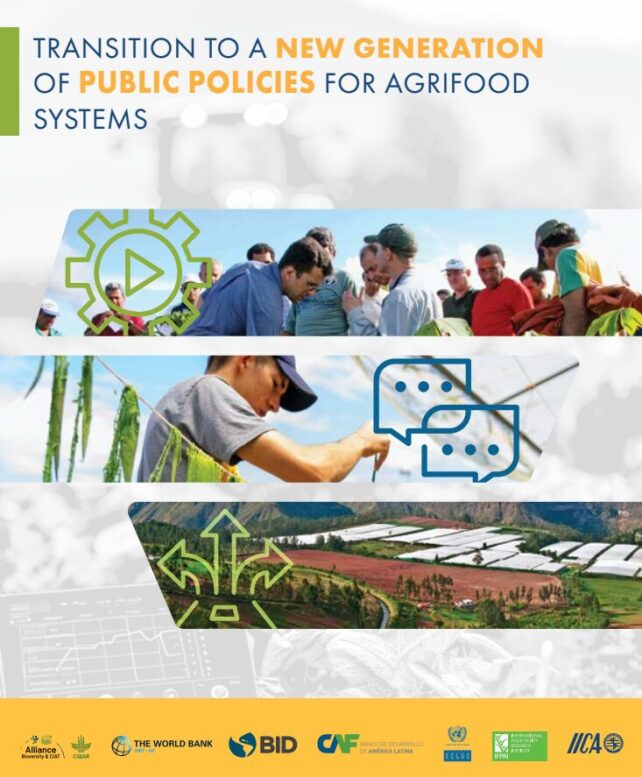
A new report emphasizes that the increasing complexity of agrifood systems—set against a backdrop of shifting geopolitical landscapes and rapid technological advancements—necessitates the development of innovative public policies in Latin America and the Caribbean.
Recognizing the deep interconnections between nutrition, health, and natural resource conservation, the publication advocates for a fresh approach to policy-making that is more coordinated, inclusive, and focused on delivering public goods.
This conclusion comes from a comprehensive 60-page document produced by the Inter-American Institute for Cooperation on Agriculture (IICA) in collaboration with various regional partners, as per a press release from the organization.
The report warns that addressing longstanding issues such as low economic growth, inequality, and ineffective governance requires a new generation of policies that prioritize sustainability, social inclusion, and strong institutional oversight.
Joaquín Arias, head of IICA’s Public Policy Observatory for Agrifood Systems (OPSAa), underscores this point, stating, “Overcoming the structural traps of low growth, high inequality and ineffective governance requires a new generation of public policies that integrate sustainability, inclusion and robust governance.”
OPSAa, a digital platform , functions as a hub for sharing knowledge and fostering dialogue among policymakers, researchers, and stakeholders across the Americas. The platform aims to support evidence-based decision-making and promote partnerships, cooperation, and the exchange of best practices among countries and actors working toward resilient agrifood systems.
The report, titled “Transition to a new generation of public policies for agrifood systems,” was crafted by an expert team from IICA and partner organizations, including the Bioversity-CIAT Alliance (part of CGIAR), the World Bank, the Inter-American Development Bank (IDB), CAF–Development Bank of Latin America and the Caribbean, the Economic Commission for Latin America and the Caribbean (ECLAC), and the International Food Policy Research Institute (IFPRI). Its authors include Joaquín Arias, Diego Arias, Jesús Antón, Carmine Paolo De Salvo, Eugenio Díaz-Bonilla, Miguel Guzmán, Pedro Martel, Deissy Martínez, Martín Piñeiro, Valeria Piñeiro, and Monica Rodrigues.
The publication explores the historical evolution of agricultural policies in Latin America and the Caribbean, emphasizing the need for a comprehensive approach that addresses the increasing complexity of agrifood systems.
According to the press release, these systems now encompass a broad array of actors, activities, and processes—from primary production to industrial processing and final consumption—posing new challenges for policymakers.
Modern policies must incorporate long-term visions, build consensus, and balance efficiency with risk management, especially regarding threats like climate change, sanitary crises, and transboundary pests and diseases. Additionally, they must embrace experimentation, learning, and adaptation as integral components.
The report stresses that the interconnectedness of production, processing, trade, and consumption across diverse territories and actors broadens policy objectives and complicates implementation. It highlights that biophysical factors like water, soil, and biodiversity, along with socioeconomic aspects such as income and nutritional health, are increasingly vulnerable to cross-border threats that require coordinated responses.
Addressing the depletion of natural resources is also a key concern. The authors advocate for strengthening science and technology, developing regulatory frameworks, and offering incentives to promote sustainable practices.
While technological innovations are expected to boost rural productivity, the report warns that global fragmentation could hinder technology transfer, emphasizing the importance of regional cooperation and national efforts in science, technology, and innovation.
The context of these challenges is further complicated by global shifts—geopolitical tensions, increased market volatility, changing consumer preferences, rapid technological progress, and mounting environmental and social pressures—all of which have transformed agriculture’s role and raised expectations for the sector.
In the release, IICA says that the global agricultural sector has adopted productivity-enhancing technologies that have helped expand food production and reduce hunger worldwide. However, these advances have also brought new nutritional challenges, notably the rise in overweight and obesity, shifting food priorities toward healthier diets and food safety concerns.
The publication showcases examples of countries that have successfully implemented policies promoting sustainability, innovation, and resilience amid these difficulties. It underscores that long-term, evidence-based policies—built on consensus and designed to be inclusive—are essential for ensuring food security and enabling necessary transformations in agrifood systems.
Furthermore, the report emphasizes that effective policy responses require strengthening governance and public institutions, broadening the scope beyond agricultural ministries, and coordinating across sectors and stakeholders. One of the key hurdles in transitioning toward a new policy paradigm is shifting from traditional subsidies and support schemes to results-driven incentives that generate lasting public goods and tangible impacts on agrifood system development.
This comprehensive analysis and set of recommendations are accessible in the publication “Transition to a new generation of public policies for agrifood systems”.
Disclaimer: The comments posted do not necessarily reflect the views of DominicaNewsOnline.com and its parent company or any individual staff member. All comments are posted subject to approval by DominicaNewsOnline.com. We never censor based on political or ideological points of view, but we do try to maintain a sensible balance between free speech and responsible moderating.
We will delete comments that:
See our full comment/user policy/agreement.