




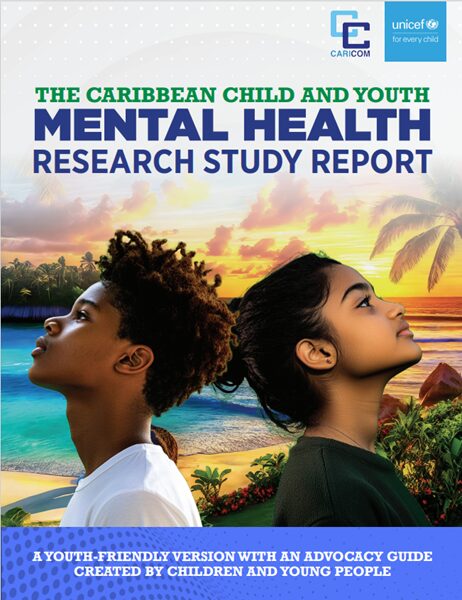
A large proportion of children and teenagers across the Caribbean are experiencing elevated symptoms of depression and anxiety. This troubling fact is derived from the 2025 Caribbean Child and Youth Mental Health Research Study Report, a comprehensive work resulting from a collaborative effort between the CARICOM Secretariat and the United Nations Children’s Fund (UNICEF).
CARICOM reported that the survey, conducted in 2024, targeted young individuals throughout the Caribbean region to investigate issues related to their mental health and overall well-being, with the goal of identifying effective solutions. Over 1,500 children and youth from 17 different countries and territories participated in the study.
The findings highlighted alarming trends in the mental health landscape of Caribbean youth: 58% of respondents reported feeling a lack of hope about the future; 56% indicated they often experience ongoing worry; and 54% expressed feelings of sadness, depression, and hopelessness.
During a virtual event on October 22, where the study’s results were presented, Hon. Dr. Frank Anthony, Guyana’s Minister of Health, praised CARICOM and UNICEF for their vital role in gaining a deeper understanding of anxiety and depression among young populations in the region.
“These findings are significant because they would help us to address some of the issues that we face across the Caribbean,” stated Minister Anthony. “Here in Guyana, we have already been examining issues related to mental health, particularly mental health among young people.”
He added, “I hope these findings will lead to meaningful interventions that truly support our young people. This must not be the final study. We need to close the data gaps that persist across the Region.”
Additionally, the CARICOM release said that Hon. Steven Jacobs, Guyana’s Minister within the Ministry of Culture, Youth and Sport, highlighted the urgent challenges impacting young people, which may contribute to heightened levels of anxiety and depression. He called for collaborative efforts to address these issues.
“Across our Region, young people are facing increasing pressures from academic stress and unemployment, the lingering effects of the pandemic and social media challenges,” stated Minister Jacobs, “Many are silently struggling, unsure where to turn. This is why prevention and early response are so critical. No single ministry can do it alone.”
In terms of potential solutions, Michele Small-Bartley, Programme Manager for Youth Development at the CARICOM Secretariat, outlined key recommendations derived from the study’s insights. She stressed the importance of improving access to mental health support services for youth, strengthening referral systems, raising awareness to combat stigma, and equipping parents and educators with the skills to recognize signs of mental distress.
“Many children, whether at home, in school, or within their communities, need our support. This document not only presents valuable data, but it also offers practical resources and evidence to guide the development of more tailored and impactful programmes for our Caribbean people,” stated the Programme Manager.
Resources
Bertrand Moses, Child Protection Officer, UNICEF Office for the Eastern Caribbean Area, shared resources developed by CARICOM and UNICEF, with the input of thousands of Caribbean youth, to tackle the issues identified, including a Directory of Governmental Health Services on the Young Caribbean Minds website. This includes links to text lines, hotlines, and other resources with country-specific listings.
The Dominica Directory can be accessed here:
The Caribbean Child and Youth Mental Health Research Study Report and related resources can be downloaded via https://www.
Mental health is rapidly becoming a very serious concern in our region. It should be given the requisite attention and resources needed to significantly curb it from exacerbating.
Look at the increasing number of our youth in mental and penal institutions. Watch the growing increase in vagrants wandering the streets. Look at those on the block and street corners trying to drink or smoke their sorrows and hopelessness away. We need urgent intervention.
These impressionable teenagers and young adults need loving, nurturing and stable homes; wholesome after-school activities and programs; availability of a variety of good paying jobs; closer knit communities where most residents look out for the best interest of one another.
We need a paradigm shift in our governance and our relationships at the community level.
We need a revolution in terms of our thinking and behaviour:
*division to co-operation
*hostility to tranquility
*selfishness to generosity
*arrogance to…
Sad to say that this unfortunate ship of burden and oppression has already sailed and has probably docked at the door steps of every Dominican home.
These are the perilous times we live in where succeeding generations are struggling to cope with the growing scourge and crippling clutches of mental illness.
The more affluent nations, who many would expect to have the wherewithal to combat and mitigate this growing pandemic, are struggling mightily to keep their populous in their right mind.
It would appear that the Covid years greatly exacerbated the the global mental health crisis, especially where the youth are concerned.
The sane among us must keep reminding the struggling ones of our legacy of overcoming, specifically slavery and economic hardships while mostly managing to stay in our right minds.
In the end, it will require an all hands on deck effort to preserve any vestige of sanity in our families, country and world.