




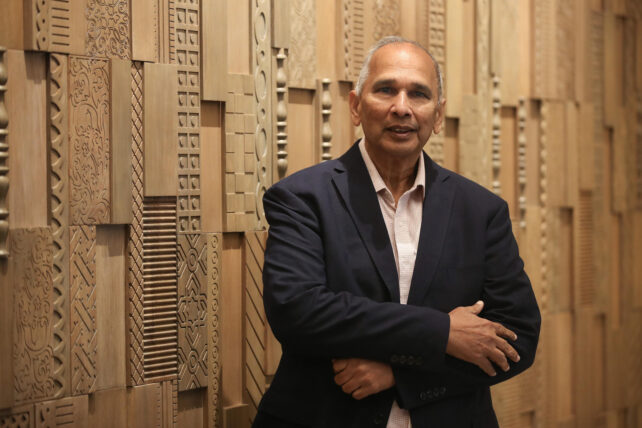
Agronomist and global development expert Muhammad Ibrahim, representing Guyana as its candidate for the presidency of the Inter-American Institute for Cooperation on Agriculture (IICA), emphasized that the importance of adopting innovative technologies to bridge productivity disparities in coffee farming. He also highlighted the necessity of establishing public policies that support small-scale producers.
Nominated by Guyana to serve as the next Director General of IICA in the upcoming November election, Ibrahim was invited to deliver the keynote speech at the opening of the 26th Latin American Coffee Symposium in El Salvador. The event drew over 600 attendees, as reported by the EFE news agency.
A press release issued today shared that in his address, Ibrahim discussed the influence of European Union (EU) regulations aimed at curbing deforestation on regional coffee cultivation. He described how IICA and allied organizations are collecting data to demonstrate that sustainable practices within the coffee industry can serve as viable solutions to environmental challenges. These practices contribute to carbon sequestration and help fortify rural communities’ roots, thus reducing migration pressures.
The Latin American Coffee Symposium is a forum that gathers experts, researchers, producers, processors, exporters, roasters, market analysts, and students from across the Americas. It also includes participation from international agencies and specialized institutions committed to advancing the regional coffee industry.
According to the emdia statement, one key organizer is PROMECAFE (the Regional Cooperative Program for Technological Development and Modernization of Coffee Farming), a network formed by coffee institutions from Guatemala, El Salvador, Nicaragua, Honduras, Costa Rica, Panama, the Dominican Republic, and Jamaica, alongside IICA and CATIE—one of the world’s leading agricultural universities, where Ibrahim previously served as director general.
The release also shared that during his presentation, Ibrahim provided a comprehensive overview of the future prospects for the coffee sector, emphasizing the technological and policy innovations required for modernization. He underscored that small producers must be supported through targeted public policies that promote sustainability and increase incomes, ultimately enhancing their quality of life.
Drawing on his 35 years of experience in sustainable agriculture management, Ibrahim shared details of ongoing projects involving IICA, PROMECAFE, CATIE, and CIRAD—an influential agricultural research organization. These initiatives aim to craft a new narrative for coffee that highlights advancements in sustainability, resilience, and competitiveness.
He identified key challenges facing the industry, including price volatility, rising input costs, trade barriers, and climate change. Ibrahim also presented data illustrating the growing global demand for coffee over recent decades and emphasized the potential for integrating agroecological practices and agroforestry systems to transition from conventional to regenerative coffee farming.
Ibrahim praised IICA’s efforts in supporting the development of standards and policies across Latin America to expand the adoption of bio-inputs such as biopesticides and biofertilizers in coffee and broader agriculture. “These actions respond to consumer demands to reduce the use of pesticides and inorganic fertilizers,” he concluded.
Disclaimer: The comments posted do not necessarily reflect the views of DominicaNewsOnline.com and its parent company or any individual staff member. All comments are posted subject to approval by DominicaNewsOnline.com. We never censor based on political or ideological points of view, but we do try to maintain a sensible balance between free speech and responsible moderating.
We will delete comments that:
See our full comment/user policy/agreement.