



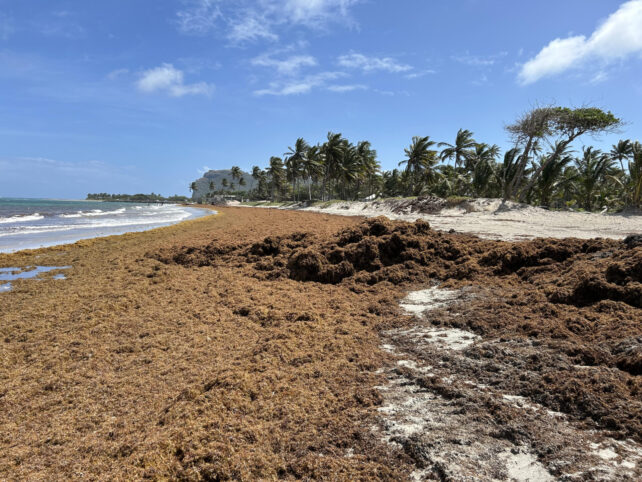
Since 2011, the Caribbean has been grappling with an extraordinary environmental challenge: the persistent arrival of sargassum from the expansive Great Atlantic Sargassum Belt. A World Bank press release stated that each year, typically between April and August, dense layers of this buoyant brown algae wash ashore along the region’s coastlines, impacting over twenty nations.
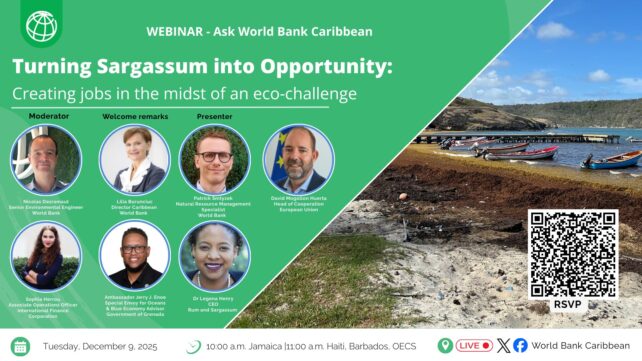
The organization also announced a webinar, Turning Sargassum into Opportunity: creating jobs in the midst of an ec-challenge, slated for Tuesday, December 9, at 11 AM.
While sargassum naturally exists in the open ocean, its frequent and massive incursions onto Caribbean shores have caused significant social, ecological, and economic issues. WB reports that the cost of cleanup efforts alone surpasses $120 million annually across the islands. Additionally, as the algae decomposes, it emits gases that pose health risks to residents and visitors, while also suffocating vital marine habitats such as coral reefs, seagrass beds, and mangroves—ecosystems critical for supporting fisheries, tourism, and local livelihoods.
Economic Opportunities Hidden in Sargassum
Despite the problems it creates, sargassum holds considerable promise as a resource due to its rich biomass and chemical diversity. It can be utilized in a variety of industries, including bioenergy production, fertilizer manufacturing, industrial materials, cosmetics, and other bio-based products.
Across the Caribbean, entrepreneurs and local cooperatives are pioneering efforts to convert this challenge into an economic opportunity—driving job creation, fostering innovation, and enhancing community resilience.
This gathering brings together policymakers, industry leaders, community representatives, and experts from the World Bank and partner organizations to explore how sargassum can be managed as a renewable resource rather than a recurring disaster. The discussion will begin by examining the economic and ecological impacts of the regular influxes on key sectors such as tourism and fisheries. Gaining insight into these interconnected effects is essential for developing strategies that safeguard natural assets while supporting the sustainability of coastal communities.
Disclaimer: The comments posted do not necessarily reflect the views of DominicaNewsOnline.com and its parent company or any individual staff member. All comments are posted subject to approval by DominicaNewsOnline.com. We never censor based on political or ideological points of view, but we do try to maintain a sensible balance between free speech and responsible moderating.
We will delete comments that:
See our full comment/user policy/agreement.