




The Inter-American Institute for Cooperation on Agriculture (IICA) is actively providing comprehensive technical assistance and fostering collaboration with both national and international stakeholders in the agricultural sector to support Costa Rica’s Ministry of Agriculture and Livestock (MAG) in the validation process of the country’s upcoming 2026–2034 National Bio-inputs Strategy.
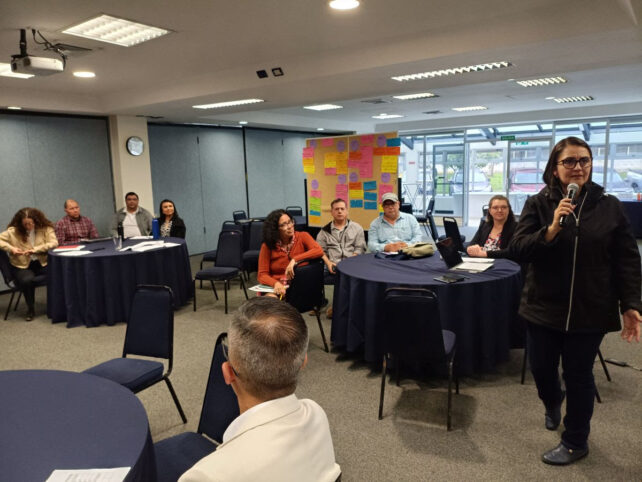
According to an IICA press release, this effort was advanced during a workshop hosted at IICA’s headquarters in San José, bringing Costa Rica closer to the operationalization of a strategic framework aimed at guiding national initiatives, aligning diverse stakeholders, and establishing key priorities to enhance the development, application, and innovation of bio-inputs.
The gathering saw participation from government agencies, academic institutions, research organizations, producer groups, and international partners, providing a high-level technical forum for reviewing and confirming the strategic focus areas, objectives, and implementation mechanisms outlined in the proposed plan.
Reportedly, the overarching goal of the 2026-2034 Bio-inputs Strategy is to create favorable conditions—covering regulatory, scientific, technical, and financial aspects—that will enable the large-scale adoption of biological solutions. Achieving this will require a combination of supportive regulations, robust scientific validation, and economic feasibility.
Key objectives of the initiative include:
– Decreasing reliance on imported chemical inputs.
– Enhancing the quality and sustainability of agricultural practices.
– Supporting the development of production chains and expanding market opportunities.
– Encouraging applied research, innovation, and the transfer of new technologies.
– Positioning Costa Rica as a regional leader in sustainable agricultural practices.
Marco Zapata, IICA’s representative in Costa Rica, emphasized, “The aim is to consolidate collaborative governance by aligning the work of the public sector, academia, the productive sector, the financial system, and international cooperation with the same national vision.”
The workshop also featured representatives from German cooperation agencies, notably the Deutsche Gesellschaft für Internationale Zusammenarbeit (GIZ), participating through the “From Farm to Fork” program and the “Development and use of bio-inputs for sustainable agriculture in Latin America” project.
This initiative is funded by FONTAGRO, a co-investment and financing mechanism dedicated to agricultural research, development, and innovation, and involves collaboration with the National Institute for Agricultural Innovation and Technology Transfer (INTA).
IICA states that these international partnerships, coordinated through the IICA-led Hemispheric Bio-inputs Platform, are instrumental in enhancing the technical robustness of Costa Rica’s strategy.
The organization adds that they facilitate regional exchange of experiences, promote harmonization of approaches, accelerate the generation of scientific evidence necessary for scaling bio-inputs, and strengthen Costa Rica’s position within the regional landscape of agricultural innovation rooted in biological solutions.
Disclaimer: The comments posted do not necessarily reflect the views of DominicaNewsOnline.com and its parent company or any individual staff member. All comments are posted subject to approval by DominicaNewsOnline.com. We never censor based on political or ideological points of view, but we do try to maintain a sensible balance between free speech and responsible moderating.
We will delete comments that:
See our full comment/user policy/agreement.