




The Caribbean Public Health Agency (CARPHA), in partnership with the UK Public Health Rapid Support Team (UK-PHRST) and the World Health Organization’s (WHO) Global Outbreak Alert and Response Network (GOARN), has successfully wrapped up the Regional GOARN Tier 1.5 Orientation to National and International Outbreak Response Workshop. This was followed by an Evaluation Workshop focused on CARPHA’s response strategies and frameworks, representing a critical advancement in enhancing the region’s readiness to swiftly and effectively address public health crises, according to a CARPHA press release.
This pioneering three-day event in the Caribbean, held from August 18 to 20 and comprised of two consecutive outbreak response workshops, was funded by The Pandemic Fund Grant. CARPHA acted as the primary executing agency, with the Inter-American Development Bank (IDB) serving as the implementing body. The press release reported that the gathering brought together 34 participants, including representatives from ten CARPHA member states and CARPHA staff based in Trinidad and Tobago. The attendees included emergency response coordinators from health ministries, public health surveillance officers, laboratory specialists, and experts in risk communication and One Health—a holistic approach recognizing the interconnectedness of human, animal, and environmental health in disease prevention and control.
The workshops aimed to address gaps in the region’s emergency response infrastructure, specifically focusing on the deployable response workforce, internal operational procedures, and multisectoral coordination systems. Strengthening these components is vital for improving both the speed and effectiveness of regional responses to rapidly emerging health threats such as pandemics, vector-borne illnesses, and other urgent public health issues.
Participants engaged in a blend of classroom instruction, practical simulation exercises, and guided discussions. The GOARN component provided hands-on training in skills transferable to international deployment, along with insights into deployment mechanisms and operational procedures. The subsequent review of CARPHA’s response plans utilized scenario-based assessments to evaluate current capabilities, clarify roles and decision-making processes, and identify opportunities for enhancing multisectoral coordination.
This pragmatic approach reportedly ensured that attendees departed with improved technical expertise and the confidence to operate effectively under pressure.
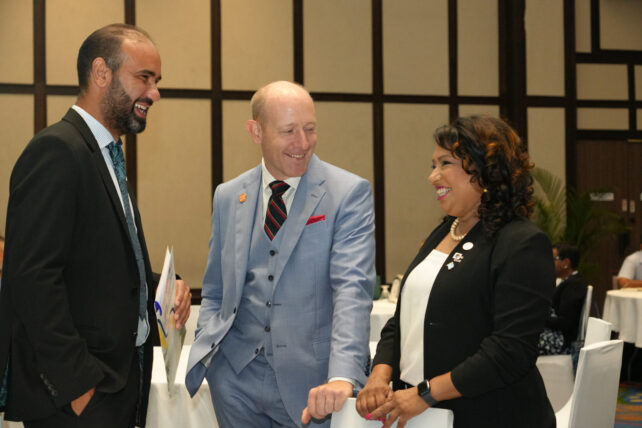
Dr. Lisa Indar, CARPHA’s Executive Director, commended the collaborative nature of the initiative, emphasizing its significance:
Dr. Ed Newman, Director of UK-PHRST and Co-Deputy Chair of the GOARN Steering Committee, highlighted the enduring benefits of the programme, saying, “ We’re delighted to partner with CARPHA on this initiative in support of their vision to expand regional Public Health Emergency Response capacity and capability. Working alongside GOARN, we’re proud that UK-PHRST has the expertise to deliver these workshops, sharing our learning and experience and that of our partners – helping ensure CARPHA and its Member States are better equipped to respond to future public health emergencies. This partnership demonstrates the power of international collaboration in building resilient public health response systems and reflects our shared commitment to strengthening global health security.”
British High Commissioner to Trinidad and Tobago, H.E. Jon Dean, expressed pride in the UK’s role, stating that the UK is proud to support the initiative through the UK Public Health Rapid Support Team, in partnership with CARPHA and WHO GOARN.
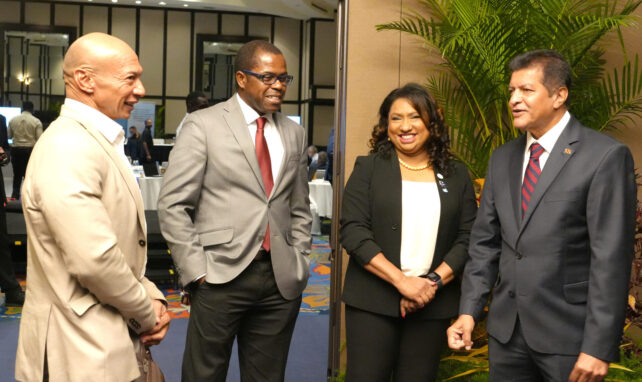
He added that the training marks an important step toward enhancing the speed and efficiency of public health emergency responses across Trinidad and Tobago and the wider Caribbean. Dean stated that the collaboration underscores the UK’s ongoing dedication to regional resilience, cooperation, and shared learning.
“This event is much more than a training session. It demonstrates a firm commitment to strengthening our collective defenses against the continually evolving threats posed by infectious diseases and health emergencies. It also affirms that, although small in size, the Caribbean stands united in purpose and readiness for action,” said Trinidad and Tobago’s Minister of Health, Dr. the Honourable Lackram Bodoe, underscoring the strategic significance of the collaborative effort.
By the conclusion of the workshops, CARPHA reports that participants had tested and optimized its regional outbreak response coordination systems, pinpointed strengths and areas needing improvement, and enhanced their capacity for cross-border and multisectoral collaboration. The skills and insights gained will be incorporated into national health systems, broadening the cadre of trained professionals prepared for rapid deployment.
This initiative, through the development of a skilled emergency response workforce and the rigorous testing of coordination protocols in realistic scenarios, underpins the long-term sustainability of the region’s emergency preparedness efforts, stated the press release. It directly contributes to reducing the health impacts of future pandemics and other urgent threats. In alignment with CARPHA’s Pandemic Fund Project goals, it aims to ensure Member States possess the necessary systems, infrastructure, and human resources to detect, respond to, and contain public health threats before they escalate into crises.
Disclaimer: The comments posted do not necessarily reflect the views of DominicaNewsOnline.com and its parent company or any individual staff member. All comments are posted subject to approval by DominicaNewsOnline.com. We never censor based on political or ideological points of view, but we do try to maintain a sensible balance between free speech and responsible moderating.
We will delete comments that:
See our full comment/user policy/agreement.