




Editor’s note: This op-ed is in response to two Letters to the Editor, recently published on Dominica News Online.
Namely: ‘Can Dominica help Trump secure America’s borders?‘ by Paul Alexander, published on December 26, 2025.
The second being:‘CBI accountability cannot be deflected by blaming U.S. systems’, by Diana Pascal, published on December 27, 2025.
As always, the views expressed in this op-ed are those of the author, and do not represent the stance of Duravision Inc., Dominica News Online, or any of its subsidiary brands.
***
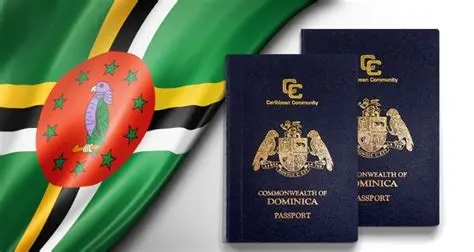
The recent U.S.Presidential Proclamation suspending certain visa categories for nationals of Dominica, Antigua & Barbuda, and—by implication—St. Kitts & Nevis, Grenada, and St. Vincent & the Grenadines, has stirred passionate debate across the Caribbean. Two prominent commentaries—by Paul Alexander and Diana Pascal—attempt to define the narrative. Each offers valuable insight. But both fall short of a broader truth: this is no longer just about compliance failures. It is a moment of geopolitical recalibration—and a test of regional unity and sovereign maturity.
A False Binary: U.S. Pressure vs. Caribbean Policy
Paul Alexander argues that the United States has unfairly weaponized its visa regime, punishing small states for monetizing their sovereignty through Citizenship by Investment (CBI) programs. He rightly highlights a core inconsistency: the U.S. failure to share visa denial data with CBI units, despite expecting airtight vetting from those very programs. Indeed, greater data-sharing could have prevented many red-flagged applicants from ever acquiring Caribbean passports.
However, Mr. Alexander overlooks a critical reality. In today’s global security environment, no country—however sovereign—can demand reciprocity without aligning with shared enforcement frameworks. The U.S. has the sovereign right to set its border policies. The Caribbean, if it seeks restored access and diplomatic equilibrium, must address valid concerns on enforcement, information integrity, and program credibility.
Caution Against Internal Scapegoating
On the other end of the spectrum, Diana Pascal calls out the Caribbean itself—blaming CBI overreliance, weak institutions, and short-term fiscal planning. She describes CBI as a transactional model in tension with the idea of citizenship as a social contract. Some of her observations resonate. But her critique too easily collapses into a political indictment, not a policy diagnosis.
Ms. Pascal does not acknowledge that CBI, when responsibly governed, has financed hospitals, post-disaster recovery, climate resilience infrastructure, and education. Nor does she fully grapple with the fact that the December 16 U.S. Proclamation cites specific cooperation failures—not macroeconomic design flaws—as the rationale for the suspension. The issue is enforcement—not revenue models.
The Missing Frame: CARICOM Fragmentation and the Venezuela-Cuba Axis – Multipolar Geopolitics
Both Alexander and Pascal miss the larger context: this is not simply about flawed due diligence or moral hazard. It is about containment, leverage, and hemispheric realignment.
Consider the December 23 statement by Trinidad and Tobago’s Prime Minister Kamla Persad-Bissessar, who disavowed CARICOM’s political and security policies – calling the regional bloc “an unreliable partner” and declared that Trinidad would chart its own path. The timing is not coincidental. Her remarks align neatly with the Trump Administration’s revived “gunboat diplomacy” posture—focused on isolating Venezuela and, by extension, destabilizing Cuba, its key regional ally.
The Caribbean has become collateral terrain in this broader standoff. Eastern Caribbean states perceived as insufficiently aligned with U.S. interests—or as offering mobility to nationals from sanctioned or adversarial states—have found themselves in the path of escalating pressure.
This is no accident. The policy footprint of U.S. Secretary of State Marco Antonio Rubio—a Cuban-American hardliner who now also serves as National Security Advisor—is unmistakable. For years, Rubio has cast Caribbean nations as a Cuba support system thus the Caribbean CBI programs as a national security loophole. Now, he has the tools to act.
Europe Joins the Chorus
The challenge is no longer Atlantic-centric. The European Union is also moving toward a stricter posture. A recent European Commission report reaffirmed that even the existence of a CBI program—regardless of misuse—may constitute grounds for suspending Schengen visa-free access. While the Caribbean has long touted its visa-free travel privileges as a selling point of CBI, those privileges now hang in the balance on both sides of the Atlantic.
The EU’s revised Visa Suspension Mechanism no longer focuses solely on “genuine link” concerns; it now considers CBI itself a structural risk, particularly where rejection rates are low and due diligence protocols remain opaque. If the U.S. suspension was the first domino, the EU could be next.
Strategic Recalibration, Not Capitulation
Let us be clear: this is not just about program names, rebranding, or lengthening residency requirements. This is about whether small states can defend sovereign policy choices while adapting to shifting global norms around mobility, identity, and enforcement. It is also about containment, alignment, and leverage. The Caribbean is being asked, implicitly, to choose sides.
Some, like Dominica, have moved swiftly—enacting reforms that address name changes, enhanced due diligence, and stricter enforcement as of October 14, 2025. Others, like St. Vincent under its new government, are striking a conciliatory yet confident tone that favors regional solidarity over isolation. And still others have remained uncomfortably silent—caught between economic vulnerability and geopolitical pressure. Still others, like Trinidad, appear to be abandoning regionalism altogether in favor of transactional bilateralism – distanced themselves from the regional bloc altogether, aligning with U.S. preferences.
What is urgently needed now is not recrimination or retreat—but coordination.
The Way Forward: Sovereign Transparency and Regional Unity
Rather than succumb to external pressure or internal division, Caribbean states must demonstrate that citizenship is neither for sale nor beyond scrutiny. A few strategic priorities emerge:
Reaffirming regional unity, rather than retreating into bilateral alignments or nationalist isolation; Formalize visa-related data-sharing protocols with U.S. and EU authorities to preempt future concerns through proactive transparency—demanding U.S. & EU data-sharing protocols for visa denials and derogatory findings, under mutual legal assistance frameworks; Accelerate the launch of the Eastern Caribbean CBI Regulatory Authority (EC CIRA)—a regional mechanism to depoliticize program oversight and restore international trust—standing up a fully independent regional CBI regulatory authority—to insulate decision-making from short-term fiscal pressures; Reaffirm regionalism, even amid disagreement, recognizing that a fragmented CARICOM weakens all member states in the eyes of Washington and Brussels alike.
Engage U.S. and EU counterparts respectfully, not from a place of guilt or defiance, but grounded in shared interests around mobility, development, and security—in secure, credible, and sovereign systems of mobility.
Elevate domestic civic education, so citizens understand that CBI is not a political football—it is a developmental lever with global implications.
This is not the time for internal fracturing or blame games. It is the time for professional regulatory convergence, paired with respectful sovereignty-based dialogue with our international partners. We must treat citizenship not as a political football or economic lifeline, but as a sacred trust, with responsibilities owed both to those who receive it—and to the global community we are part of.
Conclusion: Beyond the Blame Game
Paul Alexander is right to demand that the U.S. share responsibility and do more to collaborate rather than punish. Diana Pascal is right to call for stronger institutions—we must strengthen our institutions and economic models. But both fall short and must also recognize that we are at an inflection point—acknowledge the multipolar, multi-actor nature of the challenge. This is a geopolitical stress test—not just a policy misstep.
The question is not whether CBI programs should exist. The question is whether we will reform, regulate, and regionalize them in ways that protect sovereignty while earning international respect—rebuild its legitimacy, regionally and internationally.
That task will require more than opinion pieces. It will require leadership, coordination, and diplomacy grounded in mutual respect.
The world is watching. And the next move is ours. Let’s rise to meet the moment.
PS: Because I work in Washington DC and I am also an American Citizen does not mean that I have abandoned the place of my birth. A Dominican-born national & a U.S. citizen (High School – St. Mary’s Academy, a duly D/ca registered voter, with a valid unexpired driver’s license & passport – who intends to revalidate his right to vote in his homeland), and Managing Director & General Counsel at Global Political Solutions, based in Washington, D.C.
December 28, 2025
if these suggestions would come from local talking heads…….we already know de response of the government……..if not CBI then what.
Down here when we look around and how the government treat similar advice……..it is branded as not being patriotic. if they would follow the these suggestions they imagine themselves put out of office. Everything here has been previously suggested. Their ignorance has led us to this point because they see it as a political fight.
I think a new team would be able to do it.
Good suggestions.though.
when I read through I personally think that perhaps we really need a new team.
This government usually see this as a challenge not as patriotic advice.
The team has been in office for quite some time now and the status quo works for their political advantage.
I give thanks.
Accountability and reform are not in tension with sovereignty and diplomacy — they are its prerequisites. Let’s do the audits. Let’s publish the names. Let’s build systems that withstand scrutiny and international vetting.
But let’s also resist the reflex to collapse everything into outrage or partisan blame. This moment calls for strategic maturity. It calls for regional coordination, principled diplomacy, and sober preparation for a POST-CBI economic future — (similar to the POST Banana economy in the 1990s)—one that is no longer speculative, but rapidly approaching.
If we are serious about national resilience, we must be serious about both reform and self-determination. That’s not a contradiction. It’s the only way forward.
“It is about containment, leverage, and hemispheric realignment.”
Spot on. I think this is also a position that was previously articulated by “Point” or “Gary.”
This op-ed is on point where it acknowledges geopolitical pressure, warns that CARICOM fragmentation weakens regional leverage, and sensibly calls for regional oversight.
However, it falters by minimizing the role of revenue dependence, mischaracterizing EU risk logic, and overstating geopolitical motives to deflect from structural governance concerns.
Most critically, it frames legitimate institutional scrutiny as political scapegoating. At its core, the argument seeks reform while preserving fiscal dependence on passport sales. Contradiction that needs a resolution.
Nice summary of what is going on. And you are absolutely right that the world is watching, and very closely.
The government must act very quickly and firmly TODAY to restore CBI’s credibility even when this means radical measures and much less income in the short term. Otherwise an EU visa-free access revocation would totally kill the program forever.
Dominica’s current CBI programme is the result of intense engagements with the US and European governments. This is common knowledge because it has been in the news. Yet, they are still hell-bent on destroying it.
The issue here is really NOT the CBI programme, per se.